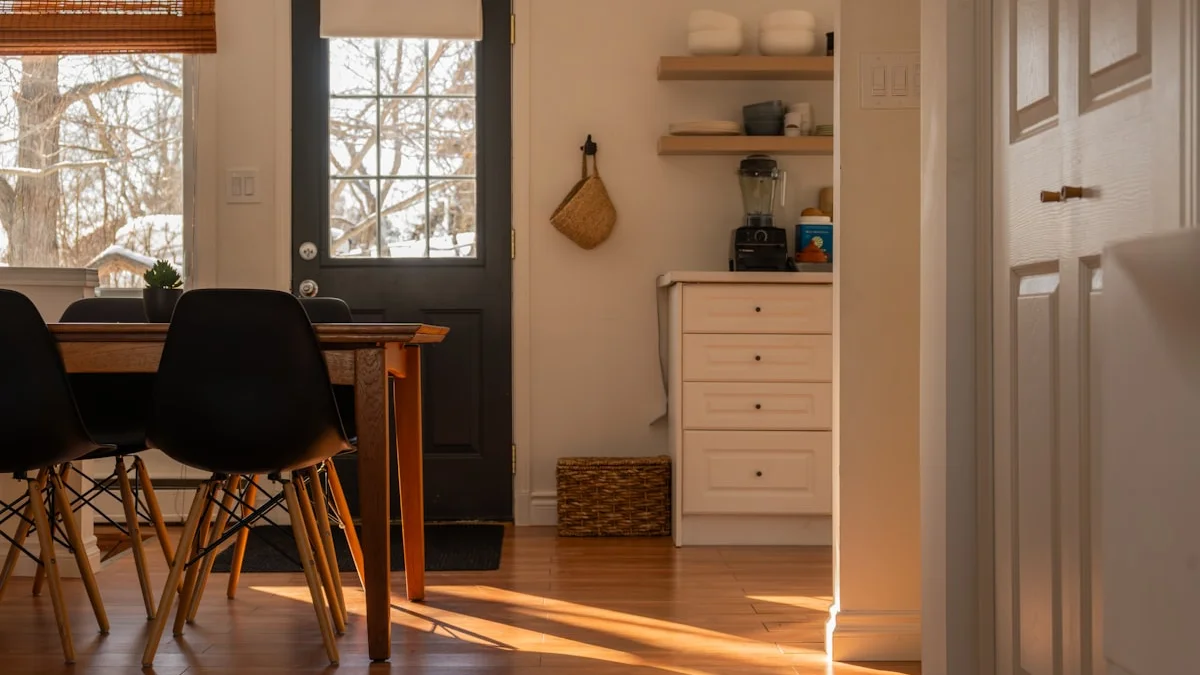
There is a room in your home you avoid without ever deciding to. You keep its lights off. You pass through it quickly. Nothing visible is wrong with it, and yet the body votes before the mind has reviewed the ballot. The doctrine takes that vote seriously, because the link between your environment and the signal you broadcast is not decoration. It is instrumentation.
The environment and order pillar guide maps the whole territory, from the chair you practice in to the window you open last. This page is the foundation: what a room does to the instrument you are, and what you can do back.
Key takeaways
- The Receiver is a tuning instrument, and it tunes to rooms.
- Rooms keep residue: arguments, strangers, attention that passed through them.
- Salt, smoke, and sound hold no power. Attention holds the power, and objects hold attention.
- A cleansed room needs an exit, and so do you: open the window.
- Practice wants one chair, one hour, and one address it can recognize.
Environment and the Signal: One Operating System
Most people treat their surroundings as scenery. The doctrine treats them as circuitry. You are not a sealed mind floating through rooms; you are a body, and the body is the Receiver, the instrument that generates and tunes your broadcast. Instruments pick up whatever they stand near.
“The Receiver is a tuning instrument, and it tunes to rooms.”
That one sentence reorganizes a life. The question is no longer only what you practice. It is where you live while you practice, and what that place has been rehearsing for years. A person can meditate faultlessly each morning and then spend the remaining sixteen hours inside a building that argues the old identity back into place. The work was never only on the cushion. It was in the walls.
What a Room Keeps
A room is not neutral storage. It is a recording surface, and it keeps what happened in it.
“A kitchen where an argument was fought holds the argument. A bedroom holding a phone holds ten thousand strangers.”
You have felt this a hundred times without naming it: the heaviness of certain rooms, the lightness of others. The doctrine names it signal residue. Where attention ran hot, residue collects. The fight you had at the table is not remembered only by you; the room hosted it, and the room still hosts it, every evening, for an audience of everyone who eats there now. Some arguments are not repeated by people. They are repeated by kitchens.
The Antenna You Live Inside
Here is the uncomfortable extension of the idea.
“Spaces accrue Signal residue, and a man can be immaculate in himself while living inside an antenna pointed at everything he is trying not to receive.”
You can do the inner work correctly and still live inside an antenna. The phone charging in the bedroom. The desk piled with half-finished things, each one a small unfinished sentence. The hallway of deferred projects. None of it is moral failure. All of it is reception, and reception is instruction: the environment keeps reinstalling the pattern the morning seat spent an hour uninstalling. A clean state inside a loud room is a sentence rewritten by every passerby.
The way out is not a bigger morning practice. It is an audit of the rooms themselves, and a room audit of the spaces that bill you walks the inventory step by step. What residue actually is, and why it lingers, gets its own page in what signal residue in rooms means.
Attention, Not Objects
Here the doctrine refuses the superstition on both sides, and the refusal is a kindness.
“The practitioner holds the power. The objects hold the practitioner”
Salt holds no power over the Field. Neither does smoke, neither does sound. What holds power is attention, and the objects are handles for it: a bell rung through the corners while your attention rides the sound, incense carried from corner to corner with the smoke dragging your notice behind it like a cursor, a thin line of salt at a threshold while you attend, deliberately, to what a threshold means. Despise the tools and you will use them sloppily. Worship them and you have rebuilt the very superstition the work dissolves. Use them as focus, and they work, because focus works.
And the result of a cleansing is not the salt. It is this:
“The room is reclaimed the way territory is: by presence.”
Territory, not tidiness. A room is taken back the way ground is taken back, by standing in it on purpose.
A Sweep Through Five Rooms
You can walk your home tonight in twenty minutes and learn more than a year of reading would teach. Move slowly through it. Ask one question per room.
- The kitchen. What was fought here, and when. If a recurring argument has a table it prefers, name the loop out loud once, calmly. Rooms lose less power to scrubbing than to being seen.
- The bedroom. A phone sleeping in a bedroom holds ten thousand strangers. Move it out, and the room returns to its two purposes: rest, and the sealing of the day.
- The chair. Practice needs an address the Signal can find again. A kitchen chair outperforms a throne; what matters is that it is the same one, every day, and never the bed.
- The threshold. If you lay a line of salt, lay it as a decision, not a charm: this far, and no further. The line is where you sign.
- The window. Every cleansing in the old texts ends the same way, and not for the reason the romantics assume. Open it. The exit matters more than the entry.
That last step is the one people skip, and it is a law rather than a flourish.
“the room must have an exit, and so must you.”
A room with no exit becomes a vault. A person with no exit becomes its exhibit. Open the window, let the room exhale, and leave it for a few minutes yourself. The five-room sweep above is laid out as a one-page card in the toolkit.
One Address the Signal Can Recognize
The sweep clears residue. A practice address builds on the cleared ground. The same chair, the same hour, the same cheap notebook: the doctrine is almost bureaucratic about this, because repetition is the compound engine of the whole work.
“The Field compounds what repeats at the same address.”
Seven days at a fixed hour outweigh thirty days of whenever you get around to it. The hour is not a constraint on the work. It is the work, in its least glamorous costume. Why the chair cannot be the bed takes the first piece of that address, and it is the piece most people quietly skip. The ways an address quietly goes wrong — the chair that drifts, the hour that slides, the notebook that turns into a diary — are gathered in practice-space mistakes that quiet the work.
Frequently asked questions
What is signal residue in a room
It is the leftover charge of attention: arguments fought, strangers admitted, hours of worry rehearsed. A room that hosted a pattern keeps hosting it until the pattern is consciously reclaimed. You already believe in it. You just called it the vibe of the place.
Do you need salt or incense to cleanse a room
No. The doctrine is explicit that salt, smoke, and sound hold no power in themselves. They are drawing aids for a decision, handles that carry your attention through the space. If you have no tools, walk the room slowly with full attention and open a window at the end. The attention did the work either way.
What if your whole home feels heavy
Start smaller than the home. One room, one window, one week. A whole-house reading comes later, and the bedroom holding a phone, and what it costs is a good single room to begin with, because its residue is modern, measurable, and everywhere.
How often should a room be cleansed
After conflict, after a heavy visit, after a season of drain, and monthly regardless, as maintenance. The calendar matters less than the honesty. If a room has been quietly billing you for a year, it will not be cleared by a single pass of attention, and it is not supposed to be.
Does a small apartment disqualify the practice
It does not. The work has always run in apartments and warehouses and checkout lines; it was never a property of the house. A single chair and a closed door are the whole real estate the doctrine asks for, and a kitchen chair outranks a throne.
This guide is educational and spiritual in nature. It is not medical, legal, or financial advice. If a practice brings up distress, speak with a qualified professional.
Your rooms were tuning you all along. The reverse is also available, and it starts with one room and one open window. The complete doctrine of the Receiver, the residue, and the address of practice is The Obsidian Key.