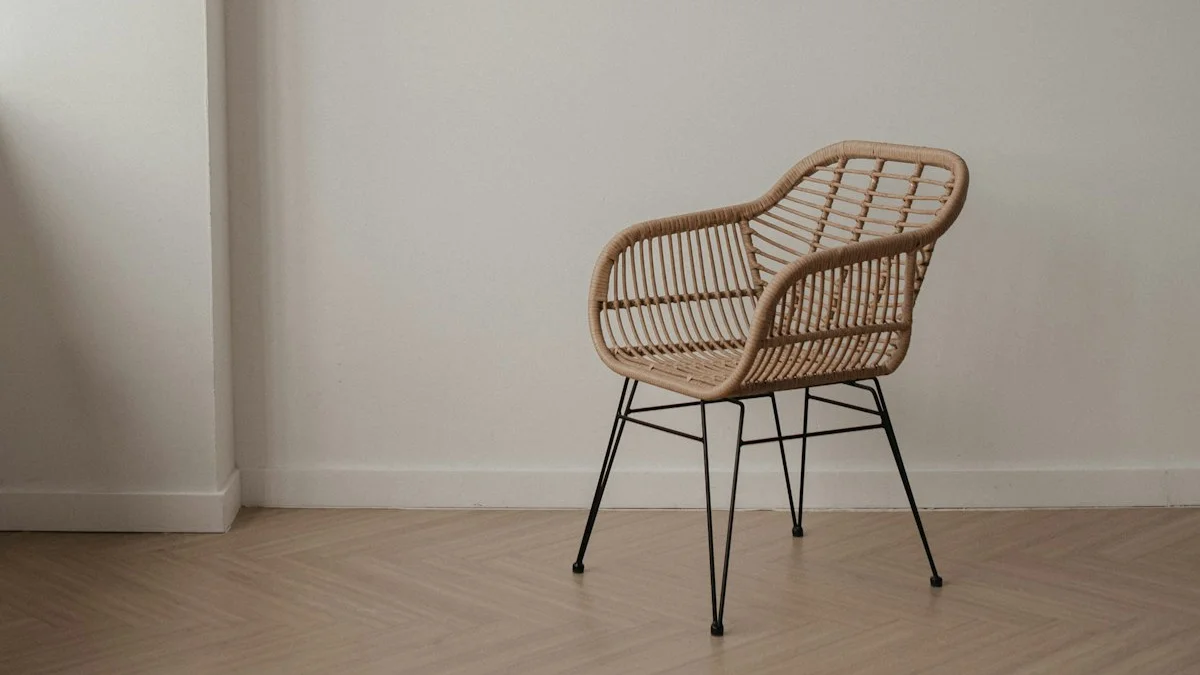
It is early, the house is not yours yet, the kettle has not spoken, and the day’s demands are still forty minutes away. In the book’s picture of that hour, the entire equipment fits on one line: there is a chair, a closed door, and a cheap notebook. Of the three, the first is the one people quietly negotiate away, because almost nobody owns a practice chair. They own a bed, a couch, and a chair that is not the bed somewhere in the kitchen, being used for coats.
The book wants that chair. Not a meditation throne, not a corner of the bedroom, and definitely not the mattress you just climbed out of. This page explains why the object matters, what the body learns from it, and how to set it up tonight with what you already own. The full context lives in the guide to environment and order, which covers the room, the hour, and the objects that hold a practice together.
Key takeaways
- Practice conducted in bed teaches the deep mind that practice is a variety of dreaming.
- A kitchen chair outperforms a throne; the point is one chair, always the same one.
- The body must learn two postures and keep them separate: the seat and the sleep.
- A closed door and a fixed hour turn the chair into an address the Signal recognizes.
- The whole setup costs nothing and can be built tonight.
Why a Chair That Is Not the Bed
The book gives the rule in two sentences and an image:
“A kitchen chair outperforms a throne. Use one chair, the same one, and let it become an address the Signal recognizes.”
An address is the operative word. The chair is not furniture in this model; it is a location on a map the body learns. Sit in the same seat at the same hour and the sitting starts to arrive before you have done anything, the way a commute makes you sleepy at your own front door. The object does not contain power. It holds a groove, and grooves are exactly what a daily practice is made of.
The reason the bed fails the same test is a lesson, not a preference. Practice in bed teaches the deep mind that practice is a species of lying down, and the Receiver obeys the lesson. You end up training drift at six in the morning and sleep at night in the same spot, and then wondering why neither arrives cleanly.
The Two Postures the Body Must Keep Separate
The book asks the body to learn exactly two postures and to keep a border between them:
“Use the same chair at the same time each day if you can. The Receiver learns a groove”
The sentence continues past the quote, and the continuation is the promise: after some weeks the groove itself begins to carry you down before you have done anything at all. Down, in this model, means below the noise of thought, into the floor of the mind where the day’s signal is actually written.
The seat has a posture: feet flat on the floor, hands resting on the thighs, spine erect but not rigid, as though the crown of the head hung from a thread. Eyes closed. Nothing about it is comfortable in the sinking way a couch is comfortable; it is alert without strain. The sleep posture is the other one entirely, horizontal, unguarded, and the body should never confuse the two. Keep the border crisp and both postures improve, because each one becomes a signal to the other that a specific kind of time is beginning.
Choosing the Chair
You almost certainly own the right chair already. The kitchen chair is the book’s own example, and it wins for unromantic reasons: it is upright, it is slightly uncomfortable, and it lives outside the bedroom. Any chair passes the same three tests.
Pick one and retire the alternatives. The chair by the window that catches the morning light, the dining chair farthest from the television, the desk chair that does not swivel. What disqualifies a chair is not ugliness but ambiguity: a chair you also read in, snack in, and scroll in can still work, though a chair reserved for one use learns faster. If the only candidate is a soft armchair, sit forward, feet flat, and let the arms go unused.
One caution from the book’s whole approach to objects: the chair is a drawing aid for a decision, the way a salt line or a lit candle is. The decision is the practice. The chair holds the practitioner; it does not replace them.
Setting the Address, Step by Step
The chair alone is one hinge of four. The book’s full setup for the morning hour fits in five moves, and you can do all of them tonight.
- Choose one chair, the same one every day, ideally a chair that is not the bed and not the couch.
- Fix the hour. The Field compounds what repeats at the same address, and precision beats generosity: seven days at six outweigh thirty days of whenever.
- Place the chair facing away from the bed if the room is small, and put a closed door between you and the household if the household is awake. A closed door is not silence, it is exclusion, and the book calls the door the circuit’s first hinge.
- Set a cheap notebook on the seat when you stand up, deliberately cheap, because the log is labor rather than devotion and should look the part.
- Sit at the fixed hour with feet flat, hands on thighs, spine long, and do nothing you have not decided in advance to do there.
If you want the morning sequence that fills the sitting itself, the toolkit holds the step-by-step version: see the /toolkit/ page for the practice cards that pair with this setup.
Three companion pages complete the address. The fixed hour as the practice’s second anchor covers the clock, the cheap notebook as an instrument of record covers the log, and why the practice wants a closed door covers the hinge that keeps the household out of the circuit.
When You Travel or Miss a Day
The address travels. The book insists the work operates in apartments, warehouses, and checkout lines, because it was never a property of the house. A hotel chair at the same hour keeps the groove; the point of the object is that it teaches the body a moveable address, not that it pins you to a room.
If you miss a day, the remedy is the address itself. Return tomorrow at the same hour to the same chair and let the log record the gap honestly. The groove survives an absence; it does not survive a renegotiation of what the chair is for. Two sentences from the book’s quieter pages hold this together: a monastery can be loud inside, and a commuter train can be silent inside, which means the address was never really about the room. The still seat is not where you hide from circumstance; it is the workshop where circumstance is prepared.
Frequently asked questions
Can I practice on my bed if I have no other option
The book’s answer is no, and the reason is mechanical rather than fussy: practice in bed teaches the deep mind that practice is a variety of dreaming, and the Receiver obeys the lesson. A kitchen chair, a bench, or a firm armchair sat upright all beat the mattress, even a chair that feels less peaceful.
Why does the same chair matter more than a better chair
Because the address is the point. One chair, the same one, at the same hour becomes a location the body recognizes, and recognition carries you down before effort starts. A better chair is still an upgrade to furniture; a familiar chair is an upgrade to the practice.
Does the chair need to face a certain direction
The book prescribes no compass direction. It cares about posture, repetition, and separation from sleep. Facing away from the bed helps in a small room, and a chair that catches morning light earns its place, but the groove comes from sameness, not from geometry.
What if my only quiet chair is also where I work
Work in it at set times and sit in it at the fixed hour, and keep the two sessions separated by at least a few minutes and a deliberate stand-up. The body reads sequences, so a short walk or a change of light between the two uses keeps the borders legible.
How long before the chair starts doing its work
The book’s own timeline is some weeks: after enough identical sittings, the groove itself begins to carry you down before you have done anything. The logbook is where you will see the curve, which is one reason the cheap notebook sits on the seat.
This guide is educational and spiritual in nature. It is not medical, legal, or financial advice. If a practice brings up distress, speak with a qualified professional.
The whole apparatus costs nothing, fits in a corner, and starts teaching the body tonight. The book that explains why the chair, the door, and the hour hold a life together is The Obsidian Key.