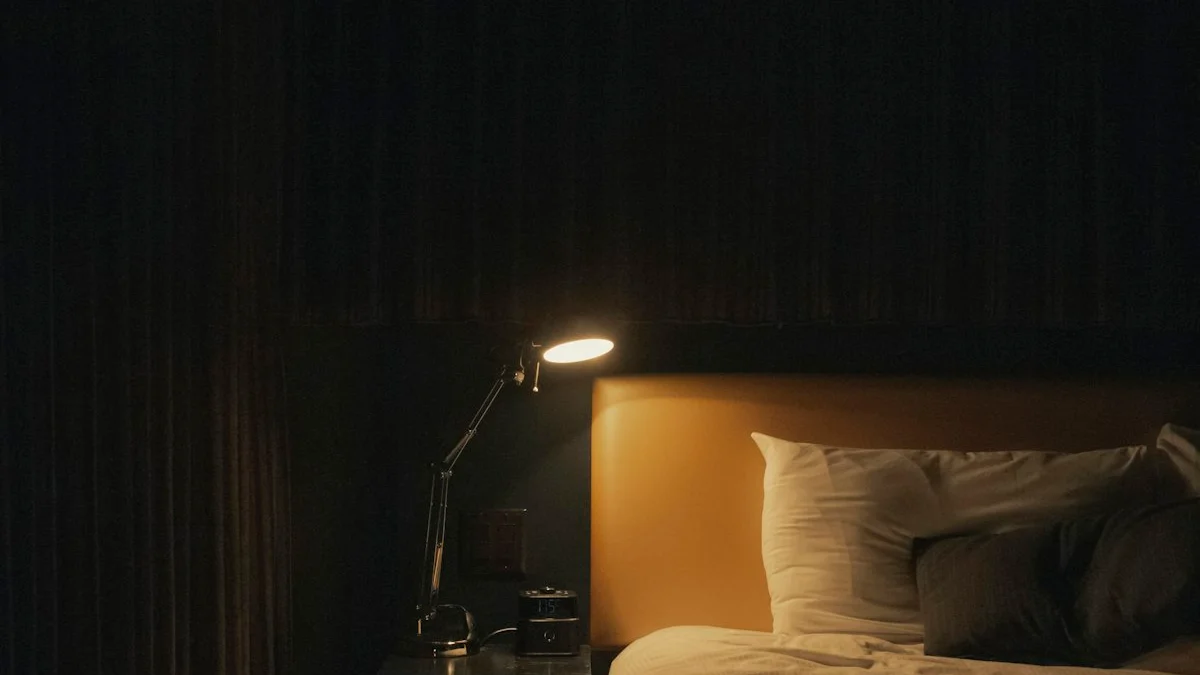
The last light most people see at night is a screen, and the first thing reached for in the morning is the same small slab of glass. The doctrine has a stranger and more specific warning about a phone in the bedroom than anything written about sleep scores or blue light: the object is not the problem, the arrangement is. A bedroom holding a phone is a room tuned all night to voices that were never invited, and the book treats that tuning as a matter of Signal rather than of habit.
Rooms, residue, and the way space shapes a practice are the terrain of the environment and order guide; this page takes the most contested room in the house and follows the doctrine through it, one decision at a time.
Key takeaways
- The Receiver is a tuning instrument, and the bedroom is where it tunes for hours.
- A bedroom holding a phone holds ten thousand strangers into the room where you sleep.
- Residue is re-authored by deliberate attention, not by objects or gestures.
- Moving the phone is one decision; the evening close is what makes the decision hold.
The Receiver tunes to rooms
The shield chapter of the book opens its treatment of space with a claim about your own body:
“The Receiver is a tuning instrument, and it tunes to rooms.”
The Receiver, in this doctrine, is the body and nervous system that generate and tune your Signal. You do not pass through rooms unchanged; you are played by them, the way a tuning fork answers a note it did not choose. Then the book gives the example that names this page:
“A kitchen where an argument was fought holds the argument. A bedroom holding a phone holds ten thousand strangers.”
You have felt both without naming them. The kitchen that stays heavy days after a harsh sentence, the room that lightens after a window and an afternoon. A phone reads as smaller than an argument, and it is not: it is an open channel to every app, every feed, every demand and stranger on the other side, resting twelve inches from a sleeping head. The book draws the conclusion without softening it:
“Spaces accrue Signal residue, and a man can be immaculate in himself while living inside an antenna pointed at everything he is trying not to receive.”
Immaculate in himself. That is the part worth sitting with. Your practice can be disciplined, your mornings sealed, your attention defended all day, and the whole operation can still be quietly re-tuned for eight hours every night by an arrangement you stopped noticing years ago.
What a phone in the bedroom does overnight
The doctrine does not treat sleep as an offline state. The shield never closes for the night, and the book says so without rhetoric:
“The Shield never sleeps; that is not rhetoric.”
The practice is deliberately arranged so that the last state you hold is the one that colors the hours you do not direct. The shield chapter ends each evening with a sealing, and gives its reason in one sentence:
“It means the practice is arranged so that even your unconscious hours broadcast from the seat, because you fell asleep from inside it.”
A phone on the nightstand builds the opposite arrangement. The last input is a feed; the last emotion is whatever the feed supplied; and the Receiver spends the night tuned to a parade of strangers instead of to the state you chose. You wake already crowded, and you call it poor sleep.
Re-ordering the room without ceremony
None of this requires crystals, salt circles, or purchases with promises printed on the box. The environment work of this doctrine runs on attention, arranged, and the bedroom is the easiest room in the house to arrange.
Give the phone another address
The phone keeps its job and loses its address. A charger in the kitchen, a drawer in the hall, a shelf by the door; one decision, made once, that changes the room every night after. If the phone is your alarm, an inexpensive clock costs less than the feed it replaces, and the doctrine’s own kit for practice is famously spare, down to a chair, a closed door, and a cheap notebook. Nothing is being renounced here. The test is the room, not the deprivation, and the room only asks where the antenna stands. The toolkit carries the one-page version of this re-order if you would rather run it as a checklist.
Close the evening on purpose
The moved phone pairs with a closed evening, and the two are one architecture. One breath down to the center before sleep, a glance at the state you are ending the day in, and the sealing statement that closes the circuit for the night, the same closing described in the evening sealing, explained. It is the mirror of the daytime move, where what a closed door does to the circuit is exclusion rather than silence. A shut door by day and a quiet nightstand by night are the same hinge: the practice chooses what the Receiver is tuned to, and then stops negotiating.
What the room becomes in a week
Residue is not scrubbed out; it is written over. The book states the mechanism plainly:
“Where attention has passed deliberately, residue has been re-authored.”
A week of closed evenings re-authors the room the way a week of rehearsal re-authors a piece of music. The heaviness lifts without a purge, because nothing was expelled; the space simply stopped being tuned to the feed. Sleep becomes the body’s room again, warm and dark and unwatched, which is the whole of what the body’s side of the circuit asks for. And when a heavier season leaves its weather in the walls, why every room needs an exit shows how a cleansed room is given a door out, not just a floor swept.
Frequently asked questions
Does the phone have to leave the room entirely
The clean form is the phone in another room, and the doctrine’s logic points there without apology. If it must stay, docked and dark beats nearby and breathing; every step of distance is a door partway closed. What fails is the arrangement where the phone is reachable, face up, and lit, because reach is the doorway.
I use the phone as an alarm clock, what then
A clock costs almost nothing and asks nothing of you at midnight. The doctrine’s own equipment for the most important hour of the day was a chair, a door, and a notebook, so the bar for adequate machinery is low. The alarm was always the negotiation’s opening offer; the feed was the actual tenant.
Is this sleep hygiene or something else
The overlap is real and the frame differs. Sleep hygiene manages behavior in order to rest well. The doctrine is managing a broadcast: the Receiver tunes for eight unconscious hours either way, and the question is who holds the frequency. Better sleep tends to arrive, and it arrives as a side effect of the tuning.
How long before the room feels different
Faster than you expect and slower than tonight. Residue re-authors wherever attention passes deliberately, so a week of sealed evenings outweighs a month of resolutions announced once. Most people notice the change on waking before they notice it at bedtime, because the morning is where the old crowding used to show.
My partner keeps a phone on their side, what then
You can re-order your side and your state, and that is not a small move: rooms are shared weather, and one sealed evening changes the temperature of the bed. Start with your own address, keep the invitation open, and let the difference argue for itself. Installation never works; demonstration usually does.
This guide is educational and spiritual in nature. It is not medical, legal, or financial advice. If a practice brings up distress, speak with a qualified professional.
The bedroom is where you hand the Signal over for the night, and you can choose what it holds. The book that works through every room in the house, from the kitchen to the study to the bed, is The Obsidian Key.