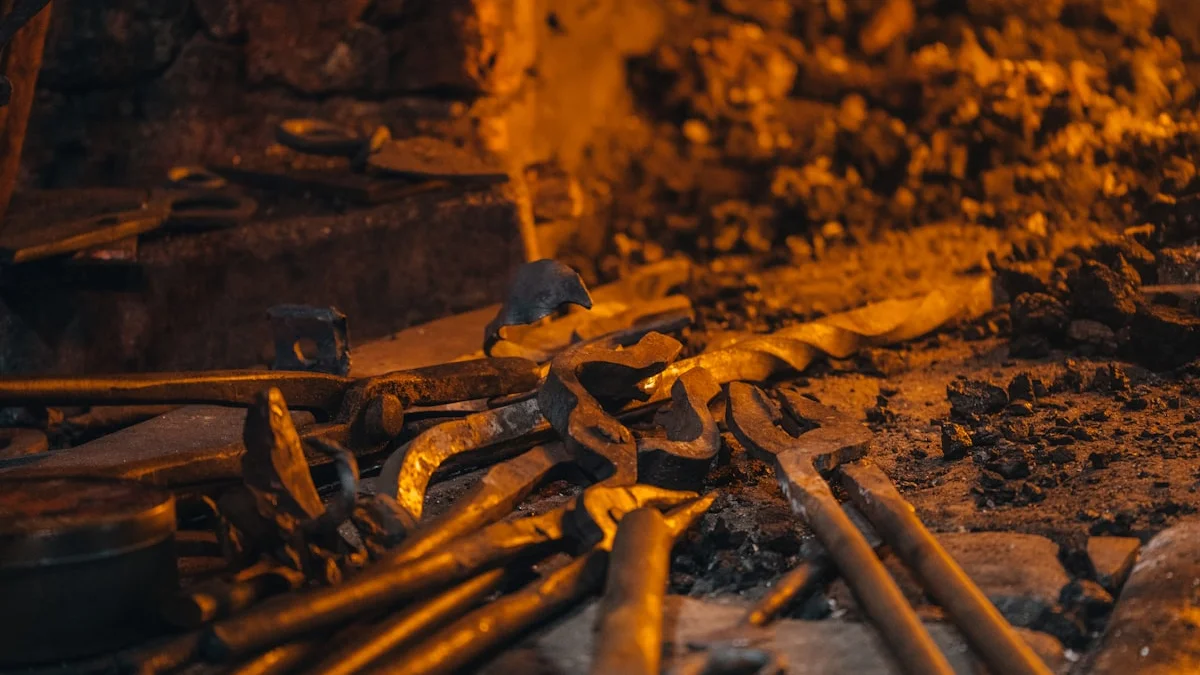
Consider the most defended person you know. The one who screens every call, keeps everyone at a measured distance, rehearses the conversations before they can happen, and sleeps badly anyway. The armor is real, the vigilance is real, and the exhaustion is real — and after all of it, the threats somehow keep pace with the defenses. That is not bad luck. That is the design flaw of armor, and the Folios locate it before offering the alternative. The shift they teach is protection not armor: authorship of your own state instead of walls raised against everyone else’s.
This page sits in the doctrine half of the spiritual protection guide, before the techniques, because the techniques inherit their meaning from it. Read it as the argument the shield is built on: why walls lose, what sovereignty actually claims, and why a held state is the most expensive target in the room.
Key takeaways
- Armor concedes the battle before it begins; it agrees you are a target.
- Defenses that multiply to match threats organize a life around enemies, and the Field supplies them.
- Untouchability is authorship: one author per Signal, written or abandoned.
- An unheld state is vacant premises — someone else will sit down and write.
- The sealed are expensive to attack, because a jab without a flinch never pays.
Why Armor Fails
The Folios open the argument with a concession nobody who wears armor wants to hear:
“Armor concedes the battle before it begins; it agrees that you are a target and merely asks to be struck more slowly.”
Read that twice. Armor does not prevent the fight; it negotiates the timing. And it loses on a second front at the same time, because the wearing of it changes the wearer: “Armored people exhaust themselves maintaining plate for threats that multiply to match it.” The plate requires patrolling. The patrolling requires attention. The attention trains the eyes to find threats, and the eyes, being excellent instruments, find them. The worst part is what the defensive life does to the medium itself:
“Their lives organize themselves around enemies, and the Field, which matches what you are, supplies them.”
A life organized around enemies is, at the level the Field reads, an identity organized around enemies — and the medium matches what you are, not what you are defending against. The book states the half-occupied condition of the defender plainly: “a man organized around his enemies is already half-occupied by them.” Armor is expensive, heavy, and — this is the design flaw — it recruits the very attacks it was built to stop.
Protection Not Armor: The Sovereignty Shift
The alternative is stated in two short lines that belong to the ninth law and that the Shield Operation is built upon. The first is a demolition: untouchability is not armor. The second is the construction that replaces it: “Untouchability is authorship.”
Authorship is a different category of defense altogether. It does not ask whether you can withstand an attack; it asks who is holding the state that an attack would have to displace:
“One author per Signal: that is the constitutional law of the inner life.”
Your Signal — the identity, attention, and emotion you broadcast — is written by a hand at every moment. Either yours, or, in your absence, whoever picked the pen up. The law does not promise that everyone will approve of the writing. It promises something narrower and stranger: nothing external can occupy a state that its author is actually holding, because occupation requires vacancy. The whole Shield Operation inherits its tone from this claim, and the book compresses the tone into one sentence:
“The Shield Operation is not war. It does not fight parasites; it stops hosting them.”
Not war. No perimeter, no watchtower, no list of enemies to patrol against. A hosting decision, revoked daily.
The Vacancy Doctrine
Here is the mechanism underneath, the secret the Veil keeps most fiercely:
“an unheld state is vacant premises.”
When you decline the chair of your own authorship — when the news decides your mood, a relative’s face decides your worth, a name on a screen decides your evening — the state does not go unadministered. Someone else sits down and writes. Usually without malice, which is the unsettling part: “A pen does not need a villain; it needs only an unattended desk.” The borrowed mood, the evening rerouted, the week colored by somebody else’s emergency — none of it required an attack. It required an empty chair.
This is also why boundaries, in this doctrine, are not walls with better manners. They are acts of writing:
“A boundary is a declaration of authorship: this state is mine to write.”
The boundary does not push people away; it makes you unavailable as material, which is all a feeding pattern ever wanted. Notice the direction of the move. Armor addresses the attacker. Authorship addresses the desk.
Expensive to Attack
What does the doctrine predict for the person who holds the state? Not invulnerability — something more economical:
“This is why the sealed are expensive to attack.”
Attack is a purchase, and the book does the accounting. It costs the attacker attention, invention, and persistence, and the purchase only pays out if the target participates: “every jab requires a flinch to be profitable.” A person holding his own state stops paying out. The jab lands on nothing that reacts, the investment returns zero, and “the world, which is nothing if not an accountant, stops making it.” Not because the world grew kind, but because the market closed.
Expect one complication in the early weeks, and the Folios name it in advance. When a habitual source of feeding stops paying, the leaning briefly escalates before the account closes — “the guilt grows more artistic, the urgencies more ingenious” — and then: “The Folios call this the last haggle of a bankrupt merchant.” The escalation is not the Flame failing. It is the Flame being repriced, and the merchant arguing against the new price is the sound of the old one dying. Hold through the haggle; it is the shortest chapter of the work.
What Holding Looks Like on an Ordinary Day
The doctrine becomes visible in small, checkable behaviors. The morning flame and boundary sentence, carried as a held state through the day’s rooms. The reply written tomorrow instead of tonight. The invitation declined from authorship rather than fear — same word, different hand. The stillness step, the free seed of the morning sit, is in the toolkit. The goal is not winning exchanges; the book is emphatic about the finish line:
“The Shield is not how you win fights. It is how you become a man fights are not worth having with.”
And the image for what replaces the armor is not a fortress at all:
“You do not need walls. You need a fire that does not go out when the wind changes its mind.”
A fire is maintained, not patrolled. It warms by default and costs attention only when the wind changes — which is the daily shape of the practice: two minutes in the morning, one breath at night, the sentence carried between. The exact line that is spoken inside the flame is walked in the boundary sentence, one line of defense; the full daily-and-monthly apparatus stands in the Shield Operation as a standing defense; the distinction between closing outward and holding inward is drawn in containment versus sovereignty; and the price others feel when the farming stops is the subject of the cost of being called cold.
Frequently asked questions
Is a boundary not just a wall with better manners
A wall addresses the attacker; a boundary addresses the state. The wall says you cannot come in. The declaration says this state is mine to write — and it works even when people are standing inside the room, because what it removes is your availability as material. A parasite feeds on a held-open state; it cannot feed on an authored one, no matter how close it stands.
Does holding your own state make you cold
Some will experience it that way, and the Folios say so without flinching. The relative who farmed your guilt will call it selfish; the colleague who farmed your urgency will call it difficult. The reframe is the book’s own: “They were never your verdicts; they were invoices.” Coldness is how a cancelled subscription is described by the thing that was subscribed to it.
What if the pressure escalates when I start holding
Expect it, and read it correctly. The leaning escalates briefly when a habitual source of feeding stops paying — the guilt grows more artistic, the urgencies more ingenious — before the account closes. The book names this the last haggle of a bankrupt merchant and instructs you to hold through it. Escalation is repricing, not failure, and it is the last act of the old arrangement rather than the first act of a new war.
Is this protection against real-world harm
No. This is a spiritual and psychological doctrine about the state you hold and the Signal you broadcast, not a method for preventing physical events, and nothing here is medical or safety advice. Real-world threats call for real-world professionals and procedures. The shield defends the one thing that travels with you into every room and every night: the authorship of your own state.
Why not simply avoid the people and feeds that attack
Because the vacancy travels with you. The unheld state is vacant premises wherever you stand, and avoidance does not hold a state — it only narrows the list of rooms in which the state is visible as unheld. Bounded presence is still presence; unbounded presence is hosting. Authorship is portable, which is precisely what makes it cheaper than any wall.
This guide is educational and spiritual in nature. It is not medical, legal, or financial advice. If a practice brings up distress, speak with a qualified professional.
The armor was always a negotiation with the attack; the fire is a decision about the author. Stop maintaining plate, hold the state, and let the market close. The Shield Operation, its daily form and its philosophy, is in The Obsidian Key.