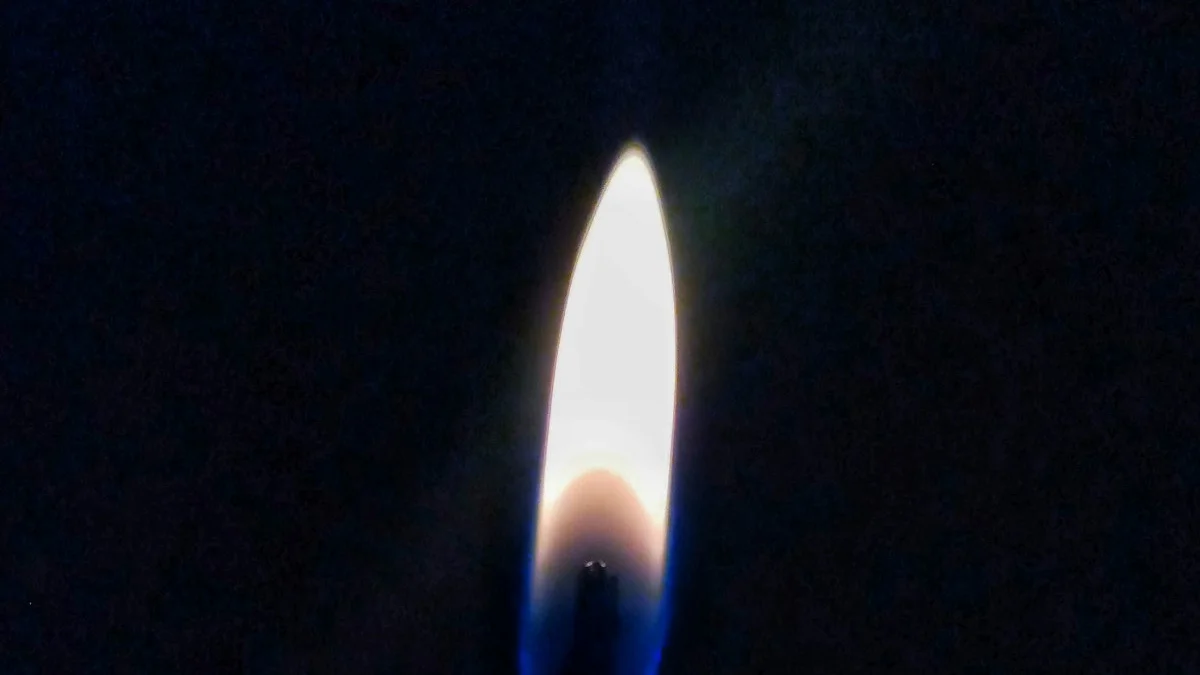
You come home from a conversation that lasted forty minutes and the apartment feels different, although nothing in it has moved. The mood in your chest is not yours. The argument you did not start keeps writing replies in your head at midnight. If any of that is familiar, the shield operation is the chapter of the book built for exactly this weather. The complete map lives in the spiritual protection guide, the pillar page for this cluster, and this post is the overview of the whole standing defense. The chapter opens with an image that replaces every wall you have ever tried to build:
You do not need walls. You need a fire that does not go out when the wind changes its mind.
A fire is tended, not stacked. That difference in verbs is the difference between this operation and every protection ritual you have been sold.
Key takeaways
- The shield operation is a standing defense built from four small practices, not a wall.
- Its philosophy is subtraction: it does not fight parasites; it stops hosting them.
- The four parts run in order of permanence: daily shield, space, audit, recovery.
- The chapter is short because a defended life needs less defense, not more.
- The end state is not winning fights; it is becoming a person fights are not worth having with.
What the Shield Operation Is
The chapter insists on philosophy before mechanics, and the philosophy is one clean distinction:
The Shield Operation is not war. It does not fight parasites; it stops hosting them.
A war posture watches enemies, catalogs enemies, rehearses enemies. Hosting is the opposite failure: an unheld state is vacant premises, and something always moves in. The shield refuses both. “It does not defend a perimeter; it maintains authorship.” Authorship is the doctrine’s real subject here — one author per Signal, your state written from your center or not written at all. The boundary sentence carries that authorship in words: this state is mine to write. And the chapter closes its argument with a summary worth memorizing: “The shielded man is organized around his own center. That is the whole art.”
Why a Wall Is the Wrong Image
Walls invite the two classic errors of protection. The first is paranoia, which the chapter names as leakage wearing armor — a defense so completely organized around threats that it becomes a permanent tenancy for them:
A man at war is organized around his enemies, and a man organized around his enemies is already half-occupied by them.
The second error is untouchability mistaken for numbness, a shell worn in place of a self. The doctrine wants neither. A wall exists because something valuable hides behind it; a fire exists because someone lives and works at the hearth. Defense in this design is maintenance, not separation: keep the flame authored, and the whole question of walls dissolves. The full argument, including why sealed states attract what they fear, is unpacked in why armor fails: protection as authorship.
The Four Parts in Order of Permanence
The operation has four parts, and the chapter is specific about the sequence:
The Operation has four parts. Run them in order of permanence: the daily shield first, the space second, the audit third, the recovery last — though recovery is the part you will be glad you rehearsed.
First, the daily shield. Two minutes each morning: three slow breaths — or the full Nine Breaths if you keep the Key protocol — the flame authored in the chest with its dark gold edge and white core, and the boundary sentence spoken once, inward, in its exact words. Before sleep, one breath to the center and a single line of confirmation: “Kept. Closed. Mine.” The exact morning form is in the daily shield, two minutes each morning.
Second, the space. Rooms keep residue, so the home is cleansed roughly once a month and after any real conflict — salt, sound, or smoke used as focus, with a window opened at the end.
Third, the audit. Twenty minutes a week spent reviewing the doors: which entrances billed you, which guests overstayed. It is inspection, not combat, and it belongs to its own weekly practice; here it only holds the third place in the order.
Fourth, the recovery rite. When a day takes damage — the guilt text, the ambush meeting — the repair happens the same day, before sleep: relight the flame, speak the sentence, give the body warmth, food, and rest. Nothing significant is decided within twenty-four hours of a disturbance, because “Decisions made from disturbance are authored by the disturber.”
Why the Chapter Is Short
Of all the operations in the book, this is the briefest, and the brevity is the teaching:
Defense in this doctrine is mostly subtraction: the Flame is two minutes, the space an hour a month, the audit twenty minutes a week, and the recovery one rehearsed evening.
The Folios measured what they wrote, and they wrote little about defense for a plain reason: “a man deep in this work is rarely worth attacking long enough to require a manual.” Total the arithmetic and the design shows itself — two minutes a day, an hour a month, twenty minutes a week, one rehearsed evening. A standing defense that costs less than an hour a month is not a metaphor for discipline; it is the design working. What the text adds beyond this introductory form — the monthly rhythm and the longer game — is laid out in the companion beyond the introductory form.
What the Shield Is Not
Not a wall, not a war, not a personality of coldness. The chapter’s final measure of success is not that you win more confrontations:
The Shield is not how you win fights. It is how you become a man fights are not worth having with.
That is the register of the whole operation: expensive to attack, rarely attacked, and uninterested in either fact. If you want to know whether your current state is porous, the self-check for a porous state lists six signs you can count across a single week.
Frequently asked questions
Do I need salt, smoke, or special tools
The chapter is blunt about it: “salt holds no power over the Field. Neither does smoke, neither does sound.” The practitioner holds the power, and the objects hold the practitioner — each tool is a handle for attention. You can begin with nothing but breath and the sentence, and add a tool only if a handle helps you focus.
Is this about protecting yourself from people
Not from people, and not against them. The shield maintains authorship of your own state, so that rooms, feeds, and conversations lose the ability to write your mood for you. People are handled with ordinary speech, later, from a settled state — which is usually when the right words finally arrive.
I am skeptical. What is actually being claimed
Claims about attention and state, and both are testable in your own record. Notice where a mood originates, how long a disturbance rents space in your head, and whether decisions taken mid-disturbance age well. You can treat the whole operation as a maintenance discipline for attention and ignore the metaphysics entirely; the practice does not require your belief to run.
What happens if I miss a morning
Nothing breaks. The flame relights in seconds, and one breath with the sentence restores the day. The nightly broadcast continues regardless: “The Shield never sleeps, because you do — and the Receiver broadcasts all night either way.” A missed morning is a door left ajar for a few hours, not a collapsed wall.
How is a shield different from a boundary
A boundary is one instrument inside the shield: “A boundary is a declaration of authorship: this state is mine to write.” The shield is the whole standing operation — flame, space, audit, recovery — that keeps the state authored around the clock, of which the spoken boundary is the daily voice.
This guide is educational and spiritual in nature. It is not medical, legal, or financial advice. If a practice brings up distress, speak with a qualified professional.
A Defense You Can Rehearse Tonight
The entire operation totals under an hour a month, and the entry fee is two minutes tomorrow morning. Build the parts in their order of permanence, let the chapter stay short, and let the defense remain what it is: subtraction, authorship, a fire that outlasts the wind. If the architecture makes sense and you want the source — the philosophy, the exact sentences, and the doctrine of the untouchable flame — you can open The Obsidian Key and begin where every practitioner begins: with one flame and two quiet minutes.