You are stopped at a red light with no payment due and no decision waiting, and you open the banking app anyway. Nothing has changed since you last looked, three minutes ago. You look anyway, and the look leaves a small gray sediment in the chest, the kind that does not wash out. You call it staying on top of things. The book calls it a rite, and it gives the rite a name older than any bank: the clench. Scarcity mindset, in the terms of this book, is not a belief you hold about money. It is this contraction, held for years, visible to anyone who knows where to look.
The clench is an anatomical thing, which is the good news. Anatomies can be studied. You will find it in three places: the body, the sentences, and the small daily rites. The wide map, the money posture the clench contradicts, lives in the money mindset pillar guide; this page is the close-up on the fist itself.
Key takeaways
- Scarcity mindset is a posture, not a balance: the Field reads the grip, not the account.
- The body holds it first: hands closed, thumbs tucked, torso curled around what it will not show.
- The sentences carry it next: a grammar in which nothing is ever chosen and things simply happen.
- The daily rites betray it: balance checks that inform nothing, deflected gifts, spending that sedates.
- You cannot argue a fist open, but you can loosen it with grammar, reception, and one deliberate movement.
Scarcity mindset is a posture, not a balance
The chapter where this name appears makes a claim that inverts the usual order of things. Ordinary advice treats the money as the cause and the fear as the effect: fix the balance and the dread will follow it down. The Folios reverse the direction entirely.
“posture is not a symptom of your finances. Your finances are a symptom of that posture.”
Read it twice, because the reversal is the whole strategy. If the finances are downstream, then every hour spent managing the number while the fist stays closed is maintenance of the disease. The Field is not reading the number:
“The Field does not audit your accounts. It audits your grip.”
A man can hold a fair salary and live entirely inside the clench, and at the level the Field actually reads, that man is indistinguishable from a pauper. That sentence is not cruelty. It is precision. Scarcity mindset is a report on posture, and posture is trainable, which makes the whole condition portable and curable in a way a balance never is.
The body: where the fist lives
The clench is not an opinion. The book locates it as a contraction of the Receiver, a body-level bracing against a world that once actually failed you, sitting below the floor where budgets and resolutions operate. This is why no spreadsheet has ever cured it for long.
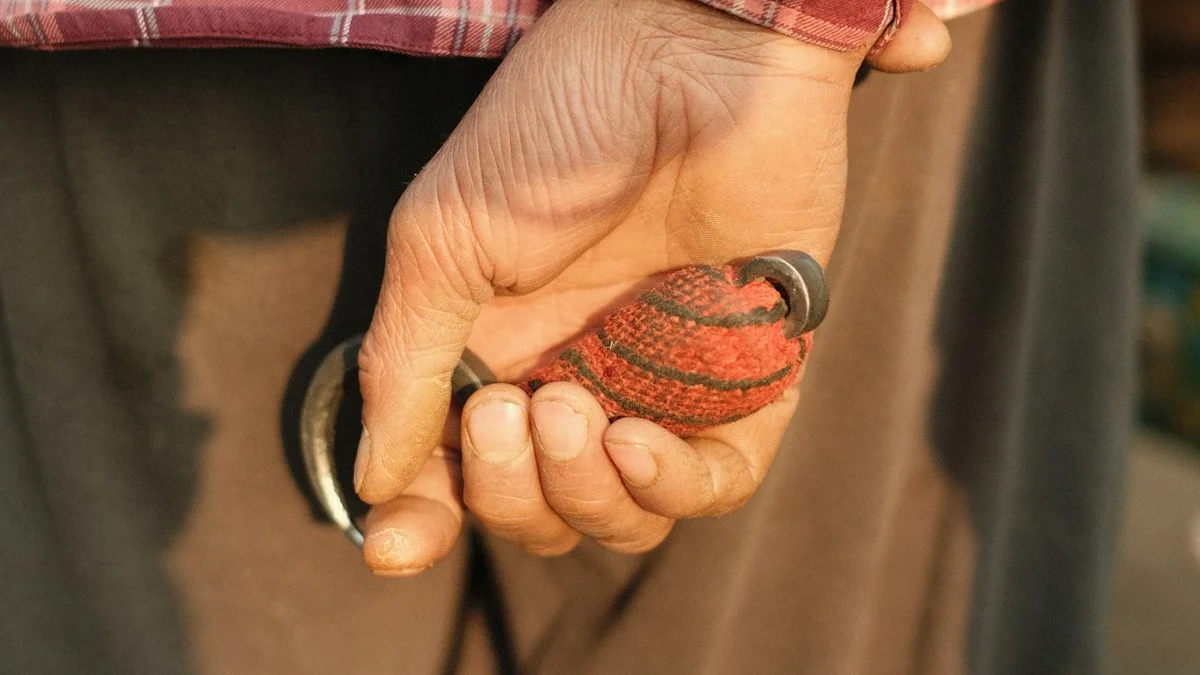
Watch the hands, the chapter suggests, on some ordinary afternoon. A man who feels poor carries them closed even when they are empty. Thumbs tucked in, fingers curled, shoulders rolled forward around a center the torso refuses to show. The body files its report on scarcity long before the mouth does, and the Field reads bodies fluently.
The checking is part of the anatomy too, and it is not information-gathering, because nothing new ever arrives:
“You check the way a tongue returns to a broken tooth.”
A tongue does not return to the tooth to fix it. It returns because the soreness is the only address it has. Three looks before noon, and you have not learned anything. You have probed the wound and paid for the privilege.
The language: sentences without a driver
The clench also speaks, and the chapter is precise about its grammar. Listen to the stock phrases of a scarcity mindset: I can’t afford it. That is not for people like me. Maybe someday. Notice what is missing from every one of them. There is no choice anywhere in the sentence. Things simply happen to the speaker, the way weather happens.
The Opened Hand speaks a different grammar, same facts, often the same amounts:
“I am not directing money there at present.”
The difference is not positivity. It is authorship. The second sentence has a subject who is doing the directing, and to say it honestly you have to feel, each time, for the hand that does the directing. The book adds that your Signal takes dictation from your own sentences with terrible fidelity, which means the swap is not cosmetic. Change the grammar and you have already begun to change the posture, because a speaker who directs is a different instrument than a weather report.
The rites: ceremonies of not enough
Because the clench lives below thought, it does not argue. It repeats. Three small ceremonies give it away, and each one can be caught tonight.
The first is the check you already met at the red light. Count the looks for one day, honestly. If the frequency outruns the information, you are not checking an account. The frequency itself is the confession.
The second is the deflection. A compliment arrives, a discount, a gift with no occasion attached, and the first motion is to shrink the moment: you shouldn’t have, it was nothing, please. The chapter reads that reflex literally. To the clenched man, receiving is a debt he cannot service, so he declines the delivery. That is the fist, live, in public, in real time.
The third is the inverted ledger. Warm spending on others, resentment toward every unit spent on yourself: the round bought freely, the coat postponed for another year, the dentist and the meal deferred in a quiet private arithmetic of unworthiness. Generosity outward with resentment inward is not generosity; it is the purchase of safety in other people’s eyes. And when the Signal goes quiet late at night, the cart fills by itself. None of that spending carries direction. It carries sedation.
Loosening the grip: three small reversals
You cannot argue a fist open. The book is firm on this, and it is the reason willpower fails here. What reaches a contraction below thought is repetition of the opposite signal, delivered at the three addresses where the clench lives.
Reverse the grammar first. For a week, catch each scarcity sentence and speak the directing form instead. Keep the amounts identical. You are not changing the budget; you are changing the speaker.
Reverse the reception next. When something is given, receive it in one motion: one breath of thanks, eye contact where that is possible, no refund of the gesture. When the reflex to shrink rises, and it will, let it pass through the chest like cold water. The book knows exactly what that cold is:
“That cold is the clench, dying.”
Reverse the movement last. One deliberate unit of money per day, moved with full attention: a tip beyond habit, a debt settled early, a payment to yourself made before any creditor speaks. The act must carry command, not plea. One movement is enough, because the amount was never the point. The point is a hand that, for one directed moment, opens on purpose. If you want the full inventory, there is a five-reading grip self-check, and if the sentences hit hardest, the grammar of poverty takes that piece apart line by line.
Frequently asked questions
Is scarcity mindset the same as having little money
No, and the difference is the useful part. The book demonstrates it with two students from fifteen years inside the Order: a sharp candidate who mastered every practice and could not be moved to direct a single unit on purpose, and a woman of modest means who moved her small sums like a queen directing a household, with affairs that arranged themselves beyond anything her arithmetic explained. Same practices. The difference was the hand. Scarcity mindset is available at any balance.
Can someone be rich and still clenched
Yes, and this is the trap inside the pile definition of wealth. If wealth is only a stored number, a large number should end the fear, and it never does, because the clench is upstream of the number. The Sixth Law draws the line differently: money is moving signal, and holding by fear closes the circuit. A hoarded fortune behaves like a locked door in the architecture, and locked doors do not transmit.
How do I stop checking my balance all day
Start by counting rather than forbidding. One day of honest counting gives you the frequency, and the frequency is the diagnosis. Then give the check a job: look only when a real decision waits on the number, and say the directing sentence before the app opens. You are not removing vigilance. You are converting it from a rite into an instrument.
What is the opposite of the clench
The book calls it the Opened Hand: a standing relation between you, value, and the Field, in which you receive without flinching and direct without strangling. It is not spending freely and it is not generosity performed for an audience. It is circulation with a driver, laid out in full in the doctrine of the Opened Hand, and it can be practiced in small daily movements long before any balance moves.
This guide is educational and spiritual in nature. It is not medical, legal, or financial advice. If a practice brings up distress, speak with a qualified professional.
The hand decides first
Scarcity mindset is not a verdict on your worth, and it is not a forecast of your accounts. It is a posture with an address: a fist, a sentence, a rite, each one visible today and each one reversible in small deliberate units. The book’s entire money teaching starts at the grip rather than the number because the grip is the part you can actually hold. If you want the architecture this comes from, it is laid out in The Obsidian Key, and the red light is as good a place as any to begin.