The box of coarse salt is still in your cupboard from the season you decided to change how your home feels. Beside it sits a small brass bell you never rang and a bundle of incense gone pale in the drawer. You bought the objects before you had a doctrine for them, which is why they did nothing. A salt sound smoke cleansing is not a spell performed by substances. It is a discipline performed by you, with the objects serving as handles for the one force in the room that actually cleans: attention. Once you see the division of labor, the tools stop being embarrassing and start being useful.
Where this practice sits among chairs, doors, hours, and residue is mapped in the environment and order guide. This page is the tools chapter — what salt, sound, and smoke each hold, what none of them can do, and how to run the whole routine in one sitting.
Key takeaways
- Salt, sound, and smoke hold no power over the Field; they hold the practitioner.
- Salt marks a threshold, sound reaches the corners, smoke drags attention through the space.
- Despising the tools and worshipping them are the same mistake; use them as focus.
- The full routine runs in about half an hour, then ends at an open window.
- Cleanse after conflict, after a heavy visit, after a season of drain — and monthly regardless.
Salt Sound Smoke Cleansing: The Rule Before the Tools
Start with the claim that makes the rest honest. Rooms hold residue. A kitchen where a hard argument was fought still carries the argument; a bedroom with a phone in it carries a crowd. The Receiver, which is your body and nervous system, tunes to whatever it lives inside, so a man can keep a spotless inner practice while sleeping inside an antenna. That is the problem the tools address — not spirits, but the accumulated weight of where attention has already been.
Now the rule, stated by the book with a bluntness that is itself a kindness:
“Despise the tools and you will use them sloppily; worship them and you have rebuilt the Veil’s superstition. Use them as focus, and they work, because focus works.”
Three postures, and only the third works. The scoffer waves the smoke around while mentally reviewing the week, and the room reorganizes nothing, because nothing was attended to. The worshipper has turned a drawing aid into an idol, and now the ritual exists to appease the salt. The practitioner uses each object the way a climber uses a piton — as a fixed point that lets the real force, deliberate attention, be applied somewhere specific. If you are a skeptic, this is the version you can run without believing anything: attention training with props.
Salt: A Drawing Aid for a Decision
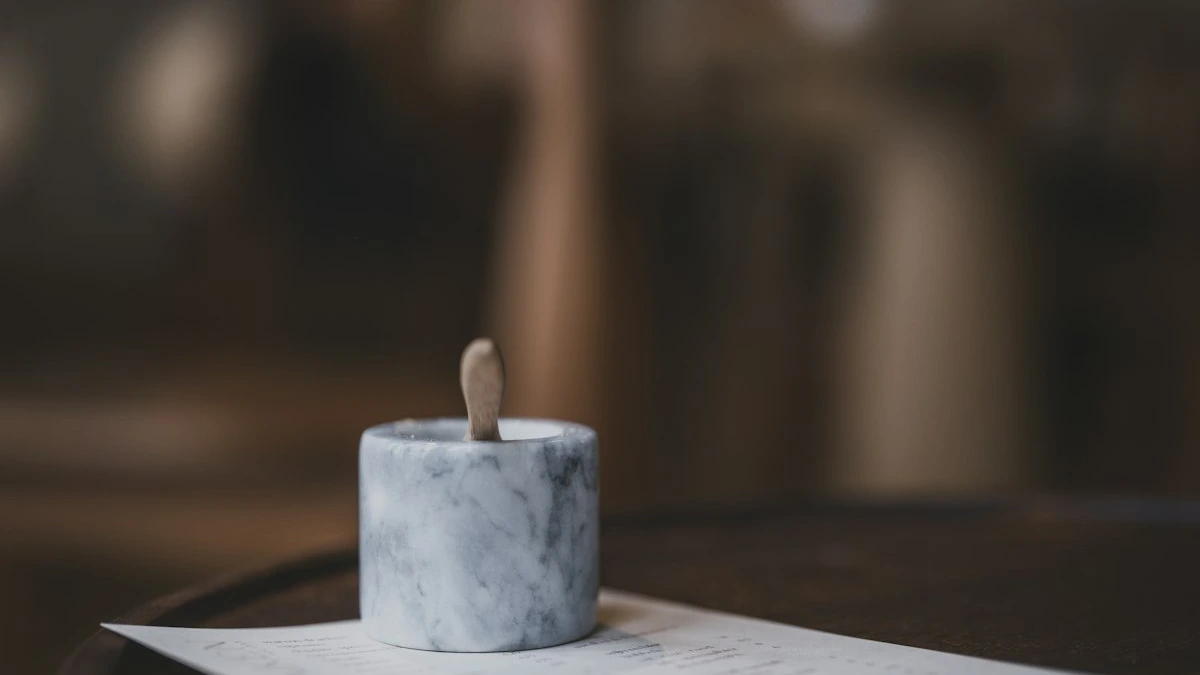
Lay a thin line at the thresholds of the room or the home. Laid or swept out, the book allows either. What matters is what your attention does while your hands work: attend deliberately to the meaning of a threshold — this far, and no further. The line is a visible decision, drawn in a substance your senses can verify, and the doctrine is explicit about where the power lives:
“The salt is a drawing aid for a decision. The decision is the cleansing.”
The salt does not guard the door while you sleep. It marks the moment you decided where your boundary runs, and a decision that has been made physical is harder to quietly unmake. When the rite is over, sweep the line out and discard it. You are keeping the decision, not the powder.
Sound: Presence Reaching the Corners
Ring a bell through the rooms. Give a single clap in each corner. Or, for the modern house gone heavy, play ten minutes of loud, physical music while you move through the space with attention, not avoidance. The variant matters less than the instruction underneath it:
“Attention rides the sound to every corner. The room is reclaimed the way territory is: by presence.”
Notice the image — territory, not magic. A room is reclaimed the way any ground is reclaimed, by someone actually standing in it, corner after corner, on purpose. Sound is simply the carrier that pulls your presence into the places the eyes skip: the corner behind the coats, the hallway that stays half dark. Ten minutes covers an ordinary apartment.
Smoke: The Cursor That Drags Attention
Carry incense, or a smoldering herb, slowly from corner to corner. The book’s image here is technological, and it is exact:
“Smoke. Incense or smoldering herb carried slowly from corner to corner, letting the thin point of the smoke drag your attention through the space like a cursor.”
The smoke is a pointer you follow, room-length by room-length, until every corner has been touched. Then comes the payoff, the doctrine in one sentence:
“Where attention has passed deliberately, residue has been re-authored.”
Re-authored. Not chased out, not neutralized — overwritten, the way new writing replaces old on a page. The smoke is the slowest of the three tools, which is precisely its value; it sets a pace at which attention cannot help but land everywhere the residue is.
The Routine in One Sitting
Run the three tools in sequence, in one pass, and the whole operation costs about half an hour.
- Choose the room, close its door, and stand still for one breath.
- Salt the thresholds of the room or home — five minutes, attention on the meaning of the boundary.
- Carry sound through the space — ten minutes of bell, claps in the corners, or loud physical music.
- Walk the smoke from corner to corner — ten minutes, eye following the thin point.
- Open a window and leave it open for a few minutes. The reason comes below.
- Write one line in the notebook: what you cleansed, and how the room read afterward.
Then the schedule, which the book states as plainly as it states anything:
“Cleanse after conflict in the home, after a heavy visit, after a season of drain — and monthly regardless, as maintenance.”
After conflict, because the kitchen is still holding it. After a heavy visit, because some guests leave weather behind. After a season of drain, because a hard stretch at work writes itself into the apartment. And monthly regardless, because maintenance is how a house stays an address instead of drifting back into an antenna. The rite for the hour after a fight has its own steps in clearing a room after an argument, the calendar rhythm is laid out in the monthly maintenance cleanse, and the final step has a page of its own in the window rule, the room’s exit. One-page cards for the whole routine sit in the toolkit.
Why the Window Ends the Rite
The old texts end every cleansing the same way, and not for the reason the romantics assume. The window is not a door for anything leaving. It is the doctrine’s last instruction about exits: “the room must have an exit, and so must you.” A room that can exhale is a room you can live in; a practice that seals everything shut becomes its own kind of heaviness. Thirty seconds of cold air, and the rite is closed with the same generosity it was opened with.
What the Tools Cannot Do
Keep the boundary sharp, because it is what separates this from the shop full of charms. No substance holds power over the Field. Salt does not repel, smoke does not purify, sound does not banish — each one is a handle, and the hands are yours. That inversion gets its own page: the objects that hold the practitioner. If a room goes heavy again a week after a complete cleansing, the tool has not failed; the leak is somewhere upstream, usually a door a person keeps walking through, or the feed you carry from room to room in your pocket. Fix the threshold where the traffic is, not the floor where the dust settled. And when the heaviness has a name attached to it, the work stops being about rooms at all.
Frequently asked questions
Do I need all three tools for a cleansing
No. The three are handles for the same current, and one honest handle outweighs three distracted ones. Use all three when the room is heavy and you want the complete pass; use one when time is short and attention is real.
Can I use music instead of a bell
Yes. The book offers it directly: ten minutes of loud, physical music, played while you move through the space with attention rather than avoidance. The music is not doing the cleansing — your movement and your attention are. The volume simply gives the attention something to ride, which is what the bell does in the traditional form.
What do I do with the salt afterward
Sweep it out and discard it. The line existed to make a decision visible, and the decision is the cleansing, not the powder. Keeping the salt as a shrine would quietly convert a drawing aid into an object of worship, which is the exact error the doctrine warns against. Throw it out; keep the boundary.
Is smoke safe around children and pets
Treat it as you would any smoke in a lived-in home: brief, ventilated, and optional. The window you open at the end is not a formality. If smoke is not workable, the sound variant carries the same weight, because every variant is a carrier for the same attention. The doctrine names tools, not oxygen debts.
How is this different from ordinary cleaning
Cleaning removes what you can see, and cleansing re-authors what you cannot. A vacuumed room can still hold an argument; a cleansed room stops holding it. The test is not the shelf but the door — how the room feels when you walk back in. Where ordinary cleaning is maintenance of objects, this is maintenance of the space’s signal, and the two do not substitute for each other.
This guide is educational and spiritual in nature. It is not medical, legal, or financial advice. If a practice brings up distress, speak with a qualified professional.
The tools were never the workers; they were the grips. Salt for the threshold, sound for the corners, smoke for the pace — and under all three, your attention, which is the thing that cleans. The full doctrine of rooms, residue, and the practice address, with the protocol it all serves, is in The Obsidian Key.