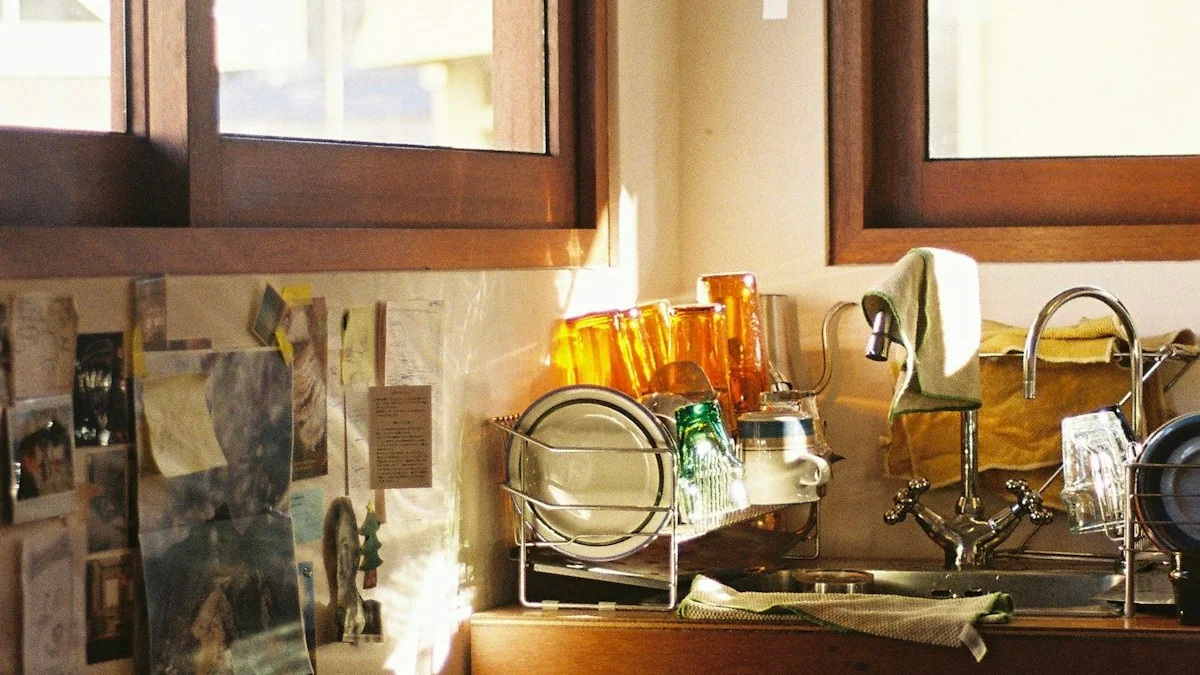
The argument ended an hour ago, and the kitchen refuses to end with it. You walk back in for a glass of water and feel it at once — a pressure in the air, chairs still angled like witnesses, a room that hums with the conversation you thought was over. Spraying something lemony does not touch it. Neither does washing the dishes. This is the hour the rite was written for. The decision to cleanse room after argument is not about the air at all. It is about authorship of the space you live in.
This page is one room-deep look inside the environment and order guide, the doctrine of how spaces tune your Signal and how you tune them back. Here is the emergency form of that craft: the steps for the hour after a fight, run with what a normal kitchen already owns.
Key takeaways
- A room where an argument was fought holds the argument as Signal residue.
- Salt, sound, and smoke hold no power of their own; they are handles for attention.
- The rite runs salt at the thresholds, sound to the corners, smoke corner to corner.
- It ends at an open window, because the room needs an exit, and so do you.
- Run it after conflict, after heavy visits, after seasons of drain, and monthly anyway.
A kitchen keeps what happened in it
The doctrine begins with a claim about rooms, stated without apology:
“A kitchen where an argument was fought holds the argument. A bedroom holding a phone holds ten thousand strangers.”
Rooms are not neutral containers in this teaching. Your Receiver — the body and nervous system that generate and tune your Signal — tunes to whatever surrounds it, the way an instrument tunes to whatever is playing nearby. A space where raised voices spent an hour carries the shape of that hour. You have felt it without naming it: the heaviness of certain rooms, the lightness of others. The book calls the accumulation Signal residue, and it adds something less comfortable — a person can be immaculate in their inner practice while living inside an antenna aimed at everything they are trying not to receive.
An argument is one of the heaviest deposits a home receives, because it was paid in attention. Both people attended hard, with full emotion, at close range, across a specific floor. The residue is not a ghost of the anger. It is the record of where attention passed, and attention passed everywhere — the table, the doorframe, the cold stove. That is why the room feels occupied even after everyone has gone to bed.
The wider anatomy of this, the way spaces accrue residue and what that means for a whole house, has its own page in how spaces accrue Signal residue. Here you only need the practical conclusion: residue can be re-authored, and there is a rite for exactly that.
What cleans, and what only carries
Before the steps, the boundary that keeps this honest. The tools are ordinary on purpose, and the doctrine is blunt about where the power lives:
“The Folios are blunt about the tools, and this bluntness is a kindness: salt holds no power over the Field. Neither does smoke, neither does sound. The practitioner holds the power. The objects hold the practitioner”
So no substance in this rite repels anything. The salt does not defend, the bell does not banish, the smoke does not purify. What each one does is give your attention a grip. The book is most precise about the salt:
“The salt is a drawing aid for a decision. The decision is the cleansing.”
The line of salt makes a decision visible — that the fighting stops at this threshold. The bell makes it audible. The smoke makes it visible again, moving slowly. If you are a skeptic, you can run the entire rite as attention training with props, because that is what it is.
How to cleanse room after argument: the four steps
Run the steps in order, in one pass. Ten to fifteen minutes is enough. Nothing here requires a purchase, and nothing requires an audience.
Step one: salt at the thresholds
Take a few pinches of ordinary salt. Lay or sweep out a thin line at the thresholds of the room — the doorway, and any other opening the conflict trafficked through. As your hands work, attend deliberately to what a threshold means: this far, and no further. The line is not a wall and it repels nothing. It is a decision your senses can verify, drawn at the exact place where the room ends.
Step two: sound to every corner
Ring a bell through the room, or give a single clap in each corner. If the hour is too late for either, the modern variant is ten minutes of loud, physical music, played while you move through the space with attention rather than avoidance. The point is not acoustics. The room is reclaimed the way territory is: by presence. Sound simply carries your attention into the places you would otherwise skip.
Step three: smoke from corner to corner
Light incense or a smoldering herb and carry it slowly, corner to corner, letting the thin point of the smoke drag your attention through the space like a cursor. Where the smoke goes, you look; where you look, attention passes; where attention passes deliberately, the room changes author. The book states it exactly:
“Where attention has passed deliberately, residue has been re-authored.”
If smoke is not workable in your home, skip it without guilt. Sound done with real attention outranks smoke done absent-mindedly, and both outrank nothing.
Step four: open the window
“the room must have an exit, and so must you.”
Open a window and let the room exhale for a minute. This step costs thirty seconds of cold air and closes the rite. Skipping it leaves the work feeling sealed rather than clean — and a sealed room is just a quieter version of a heavy one.
What changes afterward
The change is quieter than the movies promise. Nothing sparkles. What shifts is the read you get on entering: the pressure lets go, and the kitchen becomes a kitchen instead of a courtroom. Be clear about what the rite does and does not do. It re-authors the space, not the relationship. The conversation you still owe belongs to a different door, usually tomorrow, spoken slowly and without an audience.
What the rite changes is what the room does to you while you repair things. A re-authored space stops feeding the replay. You stop walking back into the argument every time you reach for a spoon, because the floor no longer holds it. Cleaning removes what you can see; the rite re-authors what you cannot. The two do not compete, and doing both in one evening is a good habit.
When to run it, and how often
The instruction for timing fits in one sentence:
“Cleanse after conflict in the home, after a heavy visit, after a season of drain — and monthly regardless, as maintenance.”
After conflict, because the room is holding it. After a heavy visit, because some guests leave weather behind. After a season of drain, because a hard stretch at work writes itself into the apartment. And monthly regardless, because maintenance is how a home stays yours instead of drifting back into an antenna. The full tools chapter sits in salt, sound, and smoke as focus, and the slower, house-wide form of the same craft is in cleansing a space with attention. One-page cards for the whole routine sit in the toolkit.
Frequently asked questions
Do I need to cleanse the whole house after one argument
No. Cleanse the room where it happened, plus any threshold the conflict trafficked through. Residue concentrates where attention was spent; a hallway argument leaves the hallway heavy and the rest of the house mostly itself. If the fight moved from room to room, follow it.
Can I do the rite the next morning instead of the same evening
Yes. Same evening is ideal, because the residue is fresh and the decision to close it is clean. A rite done the next morning still re-authors the space. Do not run it mid-argument, and do not run it as a substitute for the conversation the room is holding.
What if the person I argued with still lives here
The rite is not a verdict about the other person, and it works fine in a shared home. The only instrument is attention, and your attention is yours to spend. Cleanse the room, keep the window step, and let the boundary be about the space rather than the person. If the conflict is recurring instead of residual, the work stops being about rooms.
How is this different from ordinary cleaning
Cleaning removes what you can see: crumbs, dishes, dust. The rite re-authors what you cannot: the residue left where attention passed with force. A vacuumed kitchen can still hold an argument; a cleansed one stops holding it. Ordinary cleaning is maintenance of objects, and this is maintenance of the space’s signal.
Do I need to believe in any of this for it to work
No. The doctrine is explicit that the power is in the practitioner’s attention, not in belief and not in the objects. Run the steps with real attention and you have met the entire requirement. Skepticism costs nothing here, because nothing in the rite asks you to believe anything — only to attend.
This guide is educational and spiritual in nature. It is not medical, legal, or financial advice. If a practice brings up distress, speak with a qualified professional.
The rite is short because the doctrine of rooms is short: attention is the current that cleans, and everything else is a handle. The full environment doctrine — residue, thresholds, the practice address, and the monthly rhythm — is in The Obsidian Key.