Most readers meet the name before they meet the object. The Obsidian Folios are the hand-copied manuscripts standing behind the published book, and nearly every epigraph you find at the head of a chapter is attributed to them. Yet the story arrives sideways, in fragments, the way an archivist would tell it, so new readers often finish Part One knowing the name and not the history. This page arranges the manuscript record in order: what the folios are made of, where they were found, whose hands copied them across the centuries, and how their fragments became the epigraphs of a printed edition. The full lore guide to the manuscripts keeps this timeline beside the rest of the world’s people and places.
Key takeaways
- The Obsidian Folios are the hand-copied source manuscript of the book and the source of every epigraph.
- They were found in an unlabeled crate in the cellar of the Halloway Collection, wrapped in oilcloth.
- The covers are dark and dense like cooled tar, and the pages are stitched at the spine.
- Several hands, from different centuries, copied them in a grammar of instruction.
- The Order preserved them by transcription, and its fragments now surface at the head of this edition’s chapters.
What the Obsidian Folios actually are
The closing matter of the book gives the cleanest definition in a single breath.
“the Obsidian Folios — the hand-copied source manuscript from which this book proceeds, and the source of every epigraph. What the Folios record, the Order kept; this book is a breach.”
That sentence carries three facts at once. The folios are a manuscript, not a printed title. They are the source, which means the book you are holding derives from them and not the reverse. And they are the source of every epigraph, which makes them less a lost artifact than a living index: open the book anywhere and a piece of the folio corpus is speaking from the margin.
The narrator’s first encounter describes the object itself.
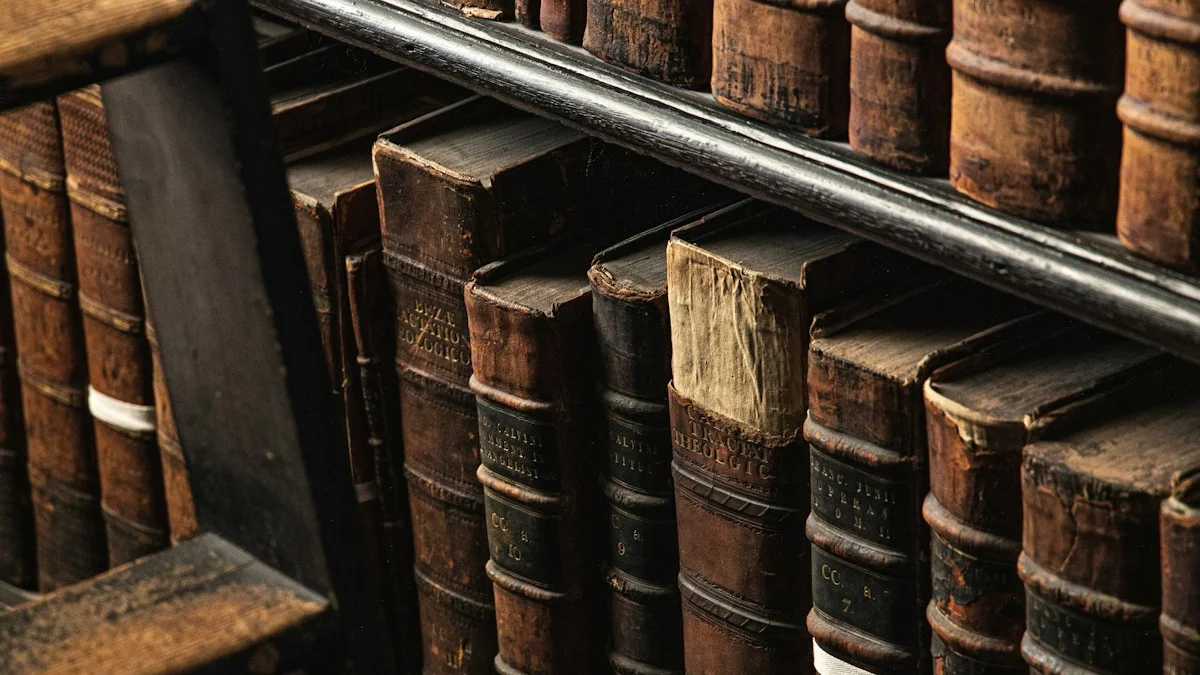
“Inside, wrapped in oilcloth and tied with waxed twine, were folios. Hand-copied, stitched at the spine, their covers dark and dense like cooled tar.”
The plural matters. What waited in the crate was not one volume but dozens, and the description of the covers is the closest the book comes to a physical signature. Dark, dense, cooled: a reader who keeps those three words holds the detail that most summaries get wrong.
The crate in the Halloway cellar
Provenance runs through a dead man’s library. The narrator’s account begins at nineteen, on the night shift cataloguing the Halloway Collection, the private occult library of a collector who had recently died. The job was inventory, not initiation. Four weeks in, the inventory snagged on a crate that was older than the rest of the house and labeled by no one.
The house had left its own instructions, written in a neat, cold hand.
“It said two things. Catalogue. Do not read.”
The second clause is the whole doctrine of custody compressed into three words. A collection can be catalogued by anyone with a system; what it contains is another matter, and the house drew the line where every archive of dangerous material draws it. Description permitted. Ingestion forbidden. The narrator’s own explanation of his error is blunter still. He opened the crate because, in his words, an unlabeled crate is a defect in a catalogue, and the catalogue was his responsibility. Curiosity arrived wearing a work order, which is why nothing about that night felt like trespass until much later.
Hands across centuries
The folios are not the work of a single author, and the book never pretends otherwise. The same paragraph that describes the covers describes the hands: dozens of volumes, in hands that changed from volume to volume, different centuries of the same discipline. That phrase is the reader’s best single clue to the age of the material. What sat in the cellar was not a manuscript but a tradition of copying, carried across generations the way a chant is carried.
| Feature | What the record shows |
|---|---|
| Covers | Dark and dense, compared to cooled tar |
| Pages | Hand-copied leaves, stitched at the spine |
| Hands | Several, changing from volume to volume |
| Span | Different centuries of one discipline |
| Grammar | Instruction rather than poetry: sit, attend, hold, wait |
None of this is decoration. A corpus copied by hand for centuries, stored in oilcloth, and governed by a do not read rule tells you how its keepers valued it. Too costly to trust to a press, and too complete to summarize from memory.
Why the Order copied instead of printed
Printing would have solved distribution and ruined everything else. The Order, the nameless society the narrator eventually served, preserved the folios through transcription, and the book is explicit about the reason.
“The act of copying slowly tunes the copyist, the way a musician is tuned by scales.”
The manuscript and the copyist were one curriculum. In the narrator’s summary of those years, the work moved him from stranger to instrument: “For fifteen years I transcribed, memorized, and tested the material on myself, and rose to keeper of the outer folios.” The title names the shallowest layer of the archive, the only layer his rank could touch, and the book is careful about the difference between a keeper who owns a shelf and a keeper who is trusted with a vault. If the method interests you more than the title, why the Order copied every page by hand follows the logic of the tuning fork to its end.
From folios to epigraphs
The last step in the history belongs to this edition.
“The epigraphs cited throughout are attributed to the Obsidian Folios, the hand-copied manuscript whose custody the author kept for fifteen years and has broken for the sake of this edition.”
Kept, then broken. The custody the narrator describes was real, with rules, ranks, and a price for leaving it, and the edition you are reading is what came out of that leaving. It is called the First Breach Edition because that is what it is: material that moved behind doors for a very long time, carried past them in full. The fragments at the head of the chapters are the visible edge of that breach. The fragment epigraphs, gathered in one place walks that arrangement line by line.
Frequently asked questions
Are the Obsidian Folios one book or many
Many. The account describes dozens of separate volumes in the crate, hand-copied and stitched, with the hands changing from volume to volume. The book you are holding proceeds from the corpus as a whole rather than from a single source text.
Why are they called obsidian
The book offers the name without ceremony, and the physical description does the explaining. The covers are dark and dense like cooled tar, which is close to the look and weight of obsidian glass. Treat the name as description rather than as ornament.
Do the folios still exist
The edition’s own closing matter treats them as the source from which the book proceeds, and the custody behind them as broken rather than destroyed. The narrator held only the shallowest layer, and the deeper layers of the archive were never open to him. What can be read today is what this edition carries.
Are the epigraphs verbatim fragments
The book attributes the epigraphs to the folios and presents them as fragments of a larger instruction. A fragment excites. A manual arms. The distinction is the book’s own: short quotations draw you toward the material, while the manual beneath them exists to be worked, not admired.
Is the manuscript history a metaphor
The book presents the frame as record, with dates, wages, ranks, and consequences, and uses it as part of the teaching method rather than as a costume. The practical material stands on its own either way, so a reader can hold both possibilities without damage.
This guide is educational and spiritual in nature. It is not medical, legal, or financial advice. If a practice brings up distress, speak with a qualified professional.
The manuscript behind the page
A crate without a label, an oilcloth wrapping, covers like cooled tar, and centuries of hands: the object is modest, and the custody around it was not. The folios stayed dark because every institution that held knowledge of this kind has faced the same choice between circulation and protection, and the lore of the manuscripts turns on how that choice was finally answered. You do not need the original to read the argument. You need the edition that was made from it, and the full text, in the author’s own hand, is The Obsidian Key.