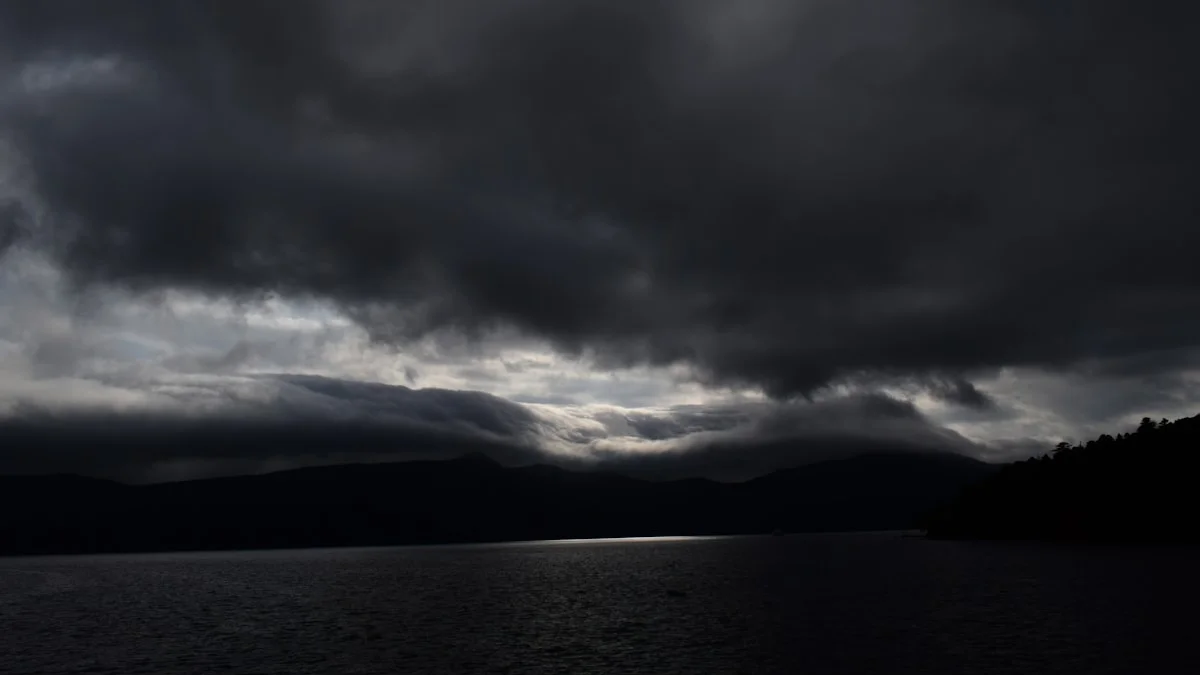
Two Tuesdays can be identical on paper — same desk, same traffic, same handful of emails — and feel like different planets. The variable is not the schedule. It is the sky you brought to it. Emotional weather is the name for that sky: the sustained tone underneath your moods, the one that colors everything and never makes the forecast. This page teaches you to read it without turning the reading into a trial, and it sits inside the emotional signal guide, where the tone is treated as the third component of your transmission.
No instrument is needed at first. Ninety seconds, one honest word for the tone, and a willingness to skip the interrogation that usually follows.
Key takeaways
- Emotional weather is the sustained tone beneath your moods, and it can be read like an instrument.
- The event is the rain; the feeling-weather came first — the arrow runs from tone toward circumstance.
- A reading is a barometer, not a verdict: you are measuring, not charging yourself.
- Episodes are weather; the baseline is climate, and climate is what the Field matches.
- Calm certainty transmits at a higher amplitude than desperate enthusiasm, because it is whole.
Emotional Weather Is a Barometer, Not a Verdict
Begin with what the reading is for. A barometer does not scold the sky; it reports pressure so you can sail accordingly. Most people do the opposite with their inner tone — either ignoring it until it becomes an event, or catching it and converting the catch into evidence against themselves. Both miss the function. The tone is data about the transmission you are currently running, and the doctrine treats it as load-bearing:
“Remove any one component and the Signal goes illegible.”
The Signal has three fused components — identity, attention, emotion — and emotion is the one people audit least. A brilliant self-concept carried through a morning of low-grade dread does not transmit as two things. It transmits as dread with a script.
Weather Versus Climate
Moods are weather: a front arrives, a front passes, Tuesday’s irritation is gone by dinner. The sustained tone underneath is climate, and climate is what the reading is for. The doctrine’s most sober line on the subject is made about money, though the mechanism is general:
“low-grade dread, held for years, is among the most effective wealth-destruction instruments ever devised”
No single day explains a line like that. The instrument is the duration. So when you take a reading, the useful question is never what is wrong with me today. It is what has the average tone of the last month been, because the average is what the Field has been matching all along. A dramatic morning matters less than the humidity you live in.
The Feeling Comes Before the Event
Here is the inversion that makes the reading worth taking. You were taught that feelings are caused by events — the traffic made you angry, the meeting made you anxious. The doctrine asks you to hold that arrow loosely, because it points the other way more often than you would believe:
“what happens is, to a far greater degree than you believe, caused by the sustained emotional weather you carry”
Then the shortest version of the idea, and the one worth keeping on a card:
“The event is the rain. The feeling-weather came first.”
Rain did not cause the climate; the climate decided what fell. Applied to a week, the tone you carried into it selected which emails felt like attacks, which silences felt like verdicts, and which coincidences you even noticed. The full mechanics of that matching — how a feeling hardens into a circumstance — are in how feelings become circumstances in the field.
How to Take a Reading Without Blame
The practice is deliberately small. Twice today, take ninety seconds: sit, feet flat, eyes closed, two long exhales — and instead of visualizing anything, stand underneath your own weather and observe it, the way you once watched rain arrive through a window. Then ask three questions, inwardly, in order.
What is the tone right now, named in one plain word — flat, tight, bright, heavy. How long has this front been in — an hour, or a season. And what is it preparing, because tone is never idle; it is the voltage of whatever you transmit next. The one-minute noise scale used in this reading is on a card in the toolkit.
Notice what the practice omits: no verdict, no improvement plan, no comparison against anyone else’s sky. The omission is not kindness; it is accuracy:
“A man shaking the table cannot sign his name.”
Self-attack shakes the table, and a shaken table cannot calibrate an instrument sitting on it. Reading your weather calmly is the only condition under which the reading is true. Blame produces a confession, not a measurement.
What the Reading Is For
A reading earns its keep twice. First, it ends the argument with events. You stop litigating the traffic and start noticing the climate that made the traffic unbearable — which is where your leverage actually is. Second, it corrects the target. The aim is not manufactured enthusiasm; performed joy is noise wearing a costume, and the Field is not moved by costume:
“Calm certainty transmits at a higher effective amplitude than desperate enthusiasm, because it is whole.”
So the weather you are learning to read for is the settled kind — relief, quiet weight, ordinary calm — which is why a settled instrument feels unremarkable from the inside and looks unmistakable from the outside. What that settled state is not, and how to tell calibration from numbness, is in calm is not numbness, reading the settled receiver, and the wider twelve-point version of this reading is in the emotional signal self-check.
Underneath the practice sits the doctrine’s cleanest sentence about the medium you are reading for:
“The Field does not respond to what you want. It responds to what you are.”
What you are, tonally, most of the time — that is the climate the reading measures, and the only thing the Field has ever matched.
Frequently asked questions
Is emotional weather the same as mood
No. A mood is weather — a front with a beginning and an end. Emotional weather is the climate underneath, the baseline tone that outlasts any single mood and shapes which moods form easily. Reading the mood tells you about the afternoon. Reading the climate tells you about the transmission, which is what the Field matches over months.
Does reading my weather mean everything is my fault
No, and the word blame is absent from the practice for a reason. The doctrine is about causation, not culpability: the sustained tone shapes which events form and how they land, which means the tone is where your influence lives. Fault is a trial; a reading is instrumentation. You take the pressure so you can sail, not so you can convict the sailor.
What if the bad weather has an obvious external cause
Then the event is real and the reading still matters, because two things are true at once: the hard thing happened, and the tone you carry through it colors what it becomes. Grief, illness, and real difficulty deserve their weather. The practice is not pretending the sky is clear; it is knowing the sky you are actually in, so the transmission you send through it is honest rather than distorted.
How often should I take a reading
Twice a day is enough — the ninety-second sitting in the morning and one at night, with three plain words logged if you keep a journal. More frequent checking turns the barometer into a worry habit. The point of a reading is a trend over weeks, and trends need a few fixed points, not a continuous surveillance of the sky.
Can I change the weather by force of will
Not by scolding it, and not in a single sitting. Weather changes the way climate does: the sustained tone shifts when the instrument is tended — breath lowered, sleep paid, the ninety-second readouts taken honestly, and the state practiced rather than demanded. Force applied to the sky is just more turbulence. The work happens underneath the weather, at the level of the Receiver, one honest reading and one settled session at a time.
This guide is educational and spiritual in nature. It is not medical, legal, or financial advice. If a practice brings up distress, speak with a qualified professional.
Take the reading, skip the trial, and let the barometer do its quiet work — the sky you carry is the one the world answers, and it can be known. The full teaching of the Signal and its three components is in The Obsidian Key.