You did the practice for eleven days. The sit, the quiet, the assumption held as well as you knew how — and on the twelfth morning the world looked exactly like the world of day zero. Same feed, same traffic, same balance. Nothing to point at, nothing to show a friend. So you did what nearly everyone does at that exact spot: you concluded it was not working, and stopped. The doctrine has a name for what you actually witnessed, and it is not failure. It is precipitation, the phase of the work where conditions are compounding invisibly, and it has a shape you can learn to recognize before you quit inside it.
This page belongs to the model chapter of the reality architecture guide, the part that explains how circumstances form at all. Read it as weather literacy for the medium itself: what gathers, what arrives, and why the delay is a feature you can work with.
Key takeaways
- The medium has a lag; the lag is physics, not punishment.
- Work moves through three phases: invisible gathering, small first matches, the event in ordinary clothes.
- Nearly everyone abandons the work in the gathering phase, when the sky is still blue.
- The Field responds to what you are, not to what you want — so consistency, not intensity, does the forming.
- Knowing the shape of the curve in advance is what keeps you in the chair.
What Precipitation Means in This Doctrine
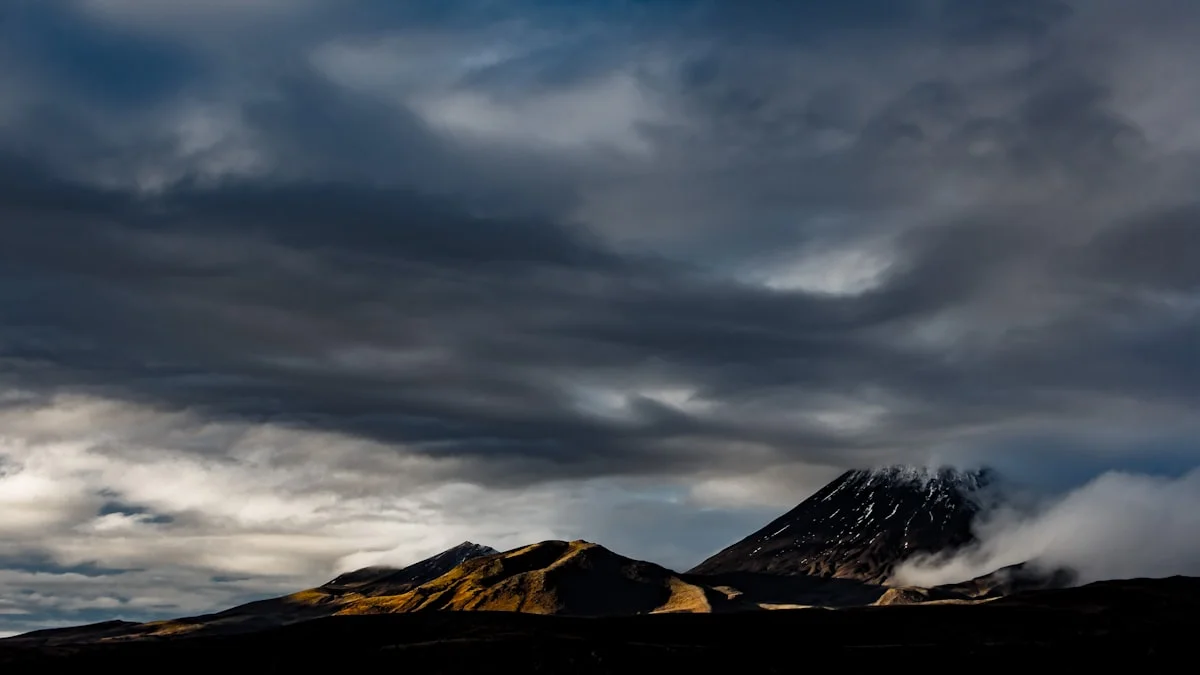
Precipitation borrows its logic from weather. A signal held with consistency begins to organize the medium the way pressure organizes air, and the book states the mechanism without softening it:
“A Signal held with any consistency begins to organize the Field the way a pressure system organizes air.”
Nothing about that sentence is instant. Pressure systems take hours to become rain, and the interval between cause and visible sky is where the whole practice is won or lost. The book names the interval directly:
“the medium has a lag, and the lag is not punishment. It is physics.”
The lag is not a deduction from your account, not a delay imposed for delay’s sake, not the universe testing your faith. It is the response time of a medium that condenses circumstances out of held states — the same response time rain has. Once you stop reading the wait as a verdict, you can start reading it as a forecast.
Phase One: The Gathering
The first phase is defined by one brutal property: nothing visible happens. Conditions assemble under the surface, quietly and exactly, while the sky above your life stays the same blue it has always been. The book is honest about how this feels from the inside — “the practice feels like talking to a room.” You sit, you assume, you seal, you stand up, and the world gives you no receipt.
This is the phase where abandonment happens, and it happens for a reasonable-seeming reason: you have no evidence. The discipline here is to redefine what you are waiting for. In the gathering phase, the evidence is the sitting itself. “Rain needs its hours of invisible assembly” — and the hours cannot be skipped, bribed, or compressed. What can be done is what every farmer knows: plant at the right address, keep showing up, and refuse to dig up the field to check on the seeds. The smallest form of the practice itself, the stillness step stripped to its bones, is free in the toolkit.
Phase Two: The First Matches
Then the medium begins to send small receipts, and the book describes their signature:
“Then come the small first matches: a name surfacing twice, an unexpected small credit, a conversation that opens a crack.”
Notice the scale. Nobody’s life reorganizes in a day; the medium first sends coincidences with momentum. A person you were thinking about calls. A small sum you had written off arrives. A topic you have been circling shows up in three unrelated places in one week. Each match is minor enough to dismiss, which is exactly the danger — the skeptical mind files them under luck and keeps waiting for thunder as the first sign of weather.
The practitioners’ discipline in this phase is recording, not consuming. A line in the notebook at night: what matched, what moved. When you can see four small matches on one page, coincidence stops being a dismissal and becomes a trend. You are not collecting proof for anyone else; you are calibrating your own eye to recognize condensation before the rain.
Phase Three: The Event in Ordinary Clothes
The third phase is the one everyone imagines will look like a miracle, and the book deflates that expectation with care:
“the event arrives, often wearing ordinary clothes, an email, an introduction, a number on a screen, and the life you were broadcasting stands in front of you asking to be recognized.”
Ordinary clothes. The opportunity that ends a flat year tends to enter as a message you almost archive, an introduction at the unremarkable end of a gathering, a figure on a screen between two worse figures. The precipitation does not announce itself with trumpets; it walks in through the door you already use. Which is why recognition is a skill and not luck: the man who has been holding a state for weeks reads an ordinary email differently, because he is no longer asking what went wrong today but what arrived.
The practical discipline is to meet the event at the state you were holding, not at the hunger you were suppressing. Circumstances that arrive are readouts of a held signal; treat them as weather finally breaking, and answer from the same seat.
Hour Nineteen: Where Nearly Everyone Quits
The practitioners who keep the work report one statistic with eerie uniformity, and the book draws it as a map:
“The ones who quit all quit at the same place: hour nineteen of a storm that needed forty.”
Hour nineteen. Not day one, when novelty carries you, and not day forty, when the rain is audible. The quit-point sits in the long unglamorous middle, where the gathering has not yet printed a single match and the storm is still assembling out of sight. Everyone who quits does so convinced they are being realistic rather than impatient — which is why the quitting feels like wisdom at the time and reads as exhaustion later.
The countermeasure is stated in one instruction and it is not motivational:
“Know the shape of the curve in advance and you will not be one of them.”
Advance is the operative word. You cannot remember the curve in the middle of the flat stretch; you can only have learned it before you entered. When you know that flat, flat, flat, then sudden is the documented shape, the flatness stops being evidence against the work and becomes evidence of your position on the curve. The phases behind you — how to read circumstances as weather and the room where the Signal is written — supply the daily mechanics; this phase only asks you to keep the chair warm.
What the Waiting Is For
The fair question is why the medium delays at all. The doctrine’s answer is structural, and it closes the loop:
“The Field does not respond to what you want. It responds to what you are.”
A lagless medium would be a nightmare, because it would obey every weather of your attention — every panic, every boredom, every five-minute fantasy — and you would be alternated into dozens of lives a day. The lag exists so that only what you hold with consistency has time to condense. Moods evaporate inside the delay; identity survives it. The wait is the filter that separates the self you visit from the self you inhabit; the whole instruction compresses into one posture: hold the state at the same address, at the same hour, and let the medium do its arithmetic. What stands between most people and a different life is not intensity of wanting. It is the patience of one held signal, outlasting the three missing mechanics that collapsed earlier attempts, hour after hour, until the weather has no choice. Where that practice goes after Part I of the book is mapped in where the architecture becomes practice.
Frequently asked questions
How long does the lag actually last
The book refuses a fixed number and gives a shape instead: a storm needs its hours, the curve goes flat and then vertical. The honest answer is that the lag is variable — shorter when the signal is cleaner and held daily, longer when the practice is intermittent. What you can control is not the clock but the consistency, and consistency is the only dial that touches the timeline.
How do I know the work is working during the gathering
You read for the small first matches and for texture. A name surfacing twice, an unexpected credit, a conversation that opens a crack — and before those, subtler shifts: the day feeling less like a defense and more like an opening. Keep one line in the notebook each evening about the day’s weather, yours and the world’s, and re-read the page weekly; trends that vanish in memory stay visible in ink.
Does wanting the result speed the precipitation up
It does the opposite. Wanting is a broadcast of absence, and the medium matches what you are rather than what you request. The waiting is not the medium being slow; it is the medium being exact — filtering out every state you merely visit. Held identity precipitates. Requested outcomes rehearse.
What if I miss a few days
Return without ceremony or restart ritual. The medium compounds what repeats at the same address; a missed week is a thinning, not an erasure, unless you answer it with guilt, which is just the old weather again. Resume the next morning at the same chair, the same hour, and let the curve forget the gap.
This guide is educational and spiritual in nature. It is not medical, legal, or financial advice. If a practice brings up distress, speak with a qualified professional.
The medium is not slow and it is not cruel; it is exact, and exactness takes time to condense. Learn the three phases, learn your hour nineteen, and stay in the chair that outlasts it. The full architecture — the Field, the Signal, the Receiver, and the practices that hold them — is in The Obsidian Key.