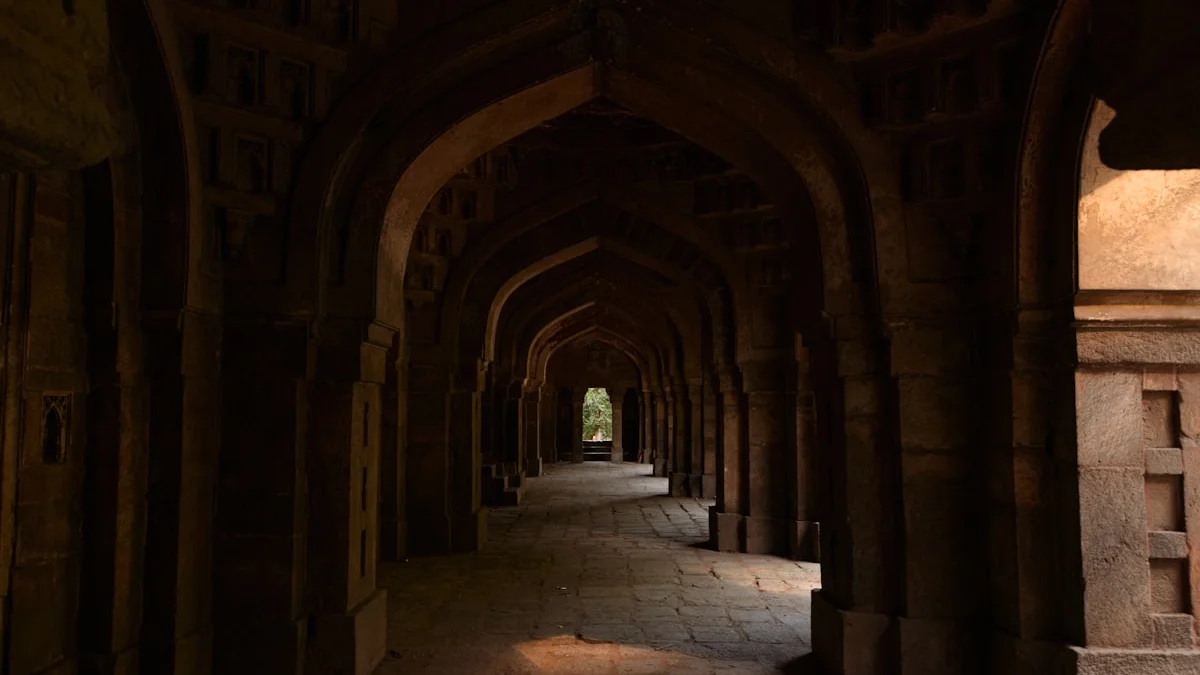
The alarm goes off and you are on your feet within seconds, which should feel like success. Eight hours, more or less, no emergencies, the tracker on your wrist satisfied. And yet there is nothing in you. No sense of having been anywhere, no bottom to draw from, just a flat corridor between the moment you lay down and the moment the day resumed. Waking up tired after eight hours has a particular taste of injustice, because you did the one thing everyone prescribes and the prescription did nothing. The doctrine, framed in the guide to evening rituals, has a name for that flat corridor night, and it reads the name as an instrument reading rather than a mystery.
Key takeaways
- A hallway night is sleep without descent: the Receiver never actually stood down.
- The final state of the day is the seed of the next, and night sets the compound like plaster.
- Eight hours in the bed cannot fix an unsealed final hour.
- Ten minutes of replay, sealing, and logging change what the night is given to hold.
- On broken nights, ninety seconds still counts, because the record rewards return, not perfection.
The hallway and the room
The book’s image is exact enough to sting. There are nights that feel like rooms: you descend, the night has furniture, depth, corners, a place to put things down, and morning finds you restored. And there are nights with the opposite signature.
“a night that passed like a hallway rather than a room”
That line appears in a diagnostic passage about rest, and the passage is precise about what the hallway means: sleep that ends without any memory of having descended anywhere. Rest, the book insists, is not the absence of activity. It is the presence of stillness. A body can lie in a bed for eight hours while the instrument it carries keeps broadcasting at full volume, and the bed will hold the body without ever holding the broadcast. That is the hallway: transit without arrival, motion without a room at the end of it.
The hallway night is common among people who would score well on every sleep-hygiene checklist. The temperature was right. The screens were off. The mattress is new. The reading still comes back flat, because hygiene manages the room around the instrument, and the instrument went under unsealed.
Waking up tired after eight hours: the instrument’s reading
The doctrine reads the hallway night as evidence about the Receiver, the body and nervous system that broadcast all night whether or not anyone chooses a frequency. Three findings typically sit under the fatigue.
-
The auction started before the eyes opened. Waking at a fixed hour with the mind already running, bids and counterbids already in session, is the signature of a Receiver that never stood down. The night was spent at the auction house, not in the room.
-
The day was carried into bed with the lights off. The body lay down at eleven, but the state did not: the argument rehearsed in the shower, the inbox re-opened at midnight, the anger relit for company. The last conscious hour ran in the exact opposite of the state a person would want printed overnight, and the instrument printed it anyway.
-
The descent never happened because nothing was finished. Open circuits do not close themselves for bedtime. The unfinished replay, the unsent answer, the day nobody marked as done, all of it keeps a person standing at the desk of the day long after the desk light is off, and the mind, holding the bag, refuses to descend with the bag still full.
None of these findings is about the mattress, which is why the mattress purchases keep disappointing. The reading is about what the night was given to hold.
The last stone on the scale
Why would the final hour carry so much weight, when it is the least productive hour of the day? The book answers with an image from the trade of weighing.
“The Field weights the final broadcast of the day the way a weighmaster weights the last stone on the scale.”
The last transmission is not one among many. It is the stone that settles the scale, because night is when the compound is set. The doctrine is specific about the mechanism: whatever is held in the last minutes is what hardens, like plaster, and the final state of the day becomes the seed of the next.
“The final state of the day is the seed of the next, and no day is forty hours long.”
That sentence carries both the warning and the relief. The warning: an unsealed final hour can undo in twenty minutes what fourteen decent hours built, which is the arithmetic behind mornings that start uphill. The relief: the correction is small. It does not need the whole day retroactively fixed. It needs the last broadcast chosen instead of defaulted.
Ten minutes that change what the night receives
The Evening Sequence of the Key takes ten minutes and consists of three small acts, and a person who has never practiced can run all three tonight. The printed cards for the sequence, with the timings and the exact statements, are in the free toolkit.
First, the replay. Seven minutes, seated low in whatever light you have, running the day’s key scenes scene by scene, and where you left your state, where you reacted, begged, leaked, or shrank, playing the scene again as the person you intend to be. Same footage, new author. The evening replay in its full form covers the details and the common objections.
Second, the seal. One minute, one statement, spoken once inward.
“The circuit is closed. Nothing enters; nothing leaves. I keep what I built today.”
The sentence is a customs declaration for the final hour, and it is meant to be honored: no feeds, no news, no argument after it. The sealing statement in full explains what the closing is protecting. Then, without review, sleep. The replay was the review; carrying the day into dreaming defeats the whole procedure.
Third, the log. Two minutes, one honest line: kept or broken, morning or missed. The book is firm that the line must be true even when the truth is ugly.
“A broken day honestly logged feeds the compound more than a perfect day invented.”
A hallway night logged honestly is already the beginning of a different night, because the log is where the practitioner and the liar in the practitioner separate.
When the night stays a hallway anyway
Some nights will not cooperate. Shift work, a sick child, a red-eye, a neighbor with a drill at dawn: the sequence gets skipped and the hallway returns. The doctrine’s answer to the broken night is the same as its answer to the broken day, and it is not a restart.
“On broken days, the minimum viable practice: nine breaths and the log. Ninety seconds.”
Ninety seconds: nine slow breaths and one true line, even at four in the morning, even in an airport. The minimum keeps the Receiver regulated and the record unbroken, and the record is the only place the chain is actually kept. A month of minimum nights is a thin month. A month of no nights is a vacancy, and vacancies get occupied by whatever is loudest.
For the larger frame, what the night does to the Signal explains why the Receiver broadcasts all night either way, and the open circuit of revenge bedtime names the habit that quietly guarantees hallway nights: stealing the final hour back from a day that owned it, at the exact hour the day most needs to be sealed.
Frequently asked questions
Is a hallway night the same as insomnia
No. Insomnia keeps you from sleeping; the hallway lets you sleep without rest, and the memory of descent is the difference. The doctrine would add that both can share a root, an instrument that never fully stands down, but the readings differ and so do the corrections. The hallway responds quickly to a sealed final hour, because it was never about the ability to sleep.
Can eight hours still be enough if the last hour was bad
The hours can be enough and the night still fails, which is exactly the puzzle this article answers. Sleep is not arithmetic performed by the bed. The instrument carries its final state across the threshold, and eight hours of broadcasting an unsealed state produces the flat corridor, on schedule, no matter what the tracker says.
Does this mean I have to do a ritual every night
It means the final broadcast happens every night whether or not anyone chooses it. The ten-minute sequence is how it gets chosen. On nights when ten minutes is impossible, the ninety-second minimum keeps the practice alive, and the doctrine treats the resumed practice as continuous rather than broken.
I fall asleep fine but my partner says I never seem rested
Then the reading deserves attention rather than dismissal. Shared exhaustion patterns are common: one person’s unsealed hours leak into both people’s nights through the ordinary proximity of nervous systems. Run the sequence for two weeks and log both the nights and the mornings. The log will tell you more than any single night can.
How long before the hallway turns into a room
The readings often soften within the first week, because the final hour is the easiest variable to change and the most heavily weighted one. The deeper descent, the true room at the end of the night, follows the regulation of the instrument, which compounds. No fixed date is promised, and none is needed: the log shows the curve.
This guide is educational and spiritual in nature. It is not medical, legal, or financial advice. If a practice brings up distress, speak with a qualified professional.
The corridor gets a room at the end of it
A hallway night is not a sentence about your body. It is a reading about your final hour, and the final hour is the one piece of the day you can still reach from where you sit. The guide to evening rituals holds the whole sequence and its variations, and the book that teaches the night its orders, stone by stone, is The Obsidian Key.