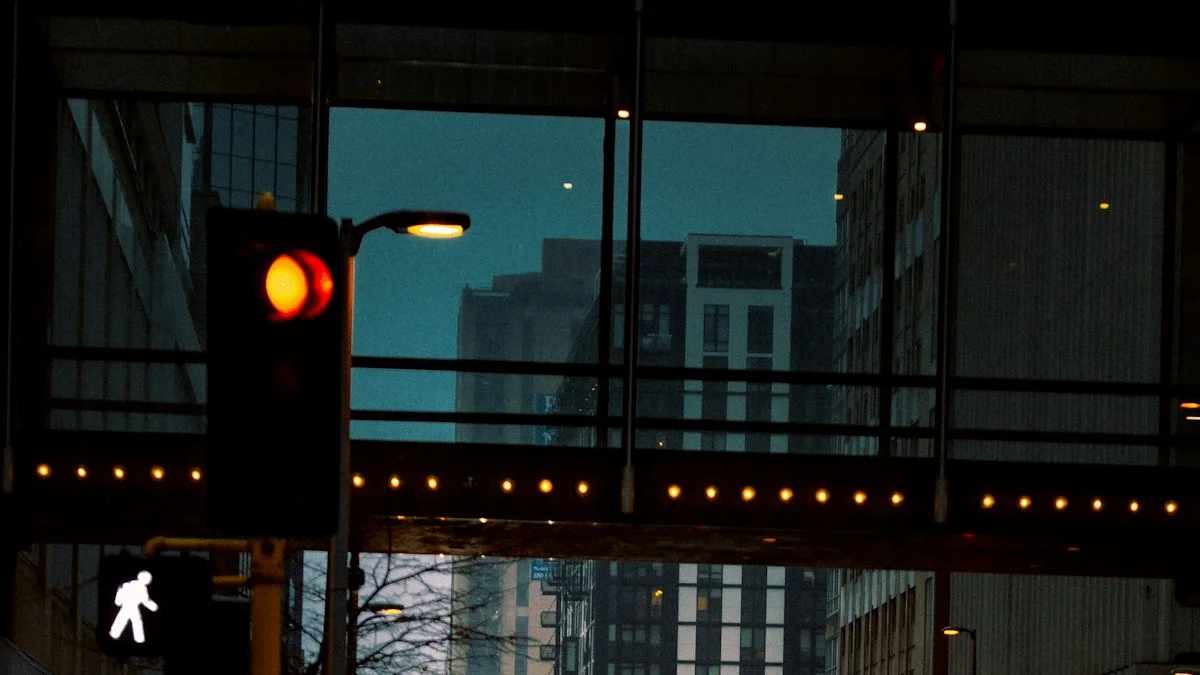
You are stopped at a red light and your thumb has already opened the banking app. No payment is pending, no decision waits on the number, and you checked twenty minutes ago. The light turns green and you close the phone with a small gray feeling you have stopped noticing. This is the checking balance habit, and the doctrine gives it an older, colder name: the clench. It is one of the first things the Wealth Operation guide asks you to watch, because money is the one domain where your posture is written down daily and cannot be faked for long. This page covers what the habit actually is, what each look costs, why the number refuses to move while you watch it, and how to replace the rite with something quieter that the Field can actually read.
Key takeaways
- The checking balance habit at red lights is not responsibility; it is the clench, a rite of lack.
- Each look deposits a small sediment of fear and returns no information.
- The Field does not audit your accounts; it audits your grip.
- Your finances are a symptom of the posture, not the other way around.
- An appointed review and one directed movement of money can replace the rite.
The checking balance habit at red lights
Count the times you look at the balance in a day. An open posture checks when it needs information for a decision. A clenched posture performs the check as a rite — at lights, in queues, in bed — and every look returns the same sediment. The doctrine’s line on this is exact and slightly merciless:
“you were not checking the account. You were probing the wound.”
Nothing in the account changed between looks. Something in you did: the check soothed the wound for a moment and then deepened it, which is what probing does. That is why the frequency is the confession. Three looks before noon, none of them informative, is not diligence. It is a man touching a bruise to see whether it still hurts, and it always does.
A rite older than any bank
Rite is the right word, because the behavior survives every change of circumstance. Raise the balance and the ritual continues at the new level; lower it and the ritual continues there. The book describes the rite the way an anatomist would:
“The clenched fist can hold nothing except its own shape. What the hand refuses to release, the Field refuses to refill.”
Notice how physical the picture is. The man who feels poor carries his hands closed even when they are empty — thumbs tucked, fingers curled, shoulders folded forward around a center he will not show. The body is honest about posture long before the mouth is honest about money. The clench is a contraction of the Receiver, a body-level bracing against a world that once actually failed you, which is why no budget, no seminar, and no resolution has ever dissolved one for long. It sits below thought, and only the instruments that reach below thought can loosen it.
What each look costs
A day spent in the clench is priced in ways the app never shows. Every transaction becomes a negotiation with an enemy. A menu reads like a hostage document. The drive home fills with rehearsals of a conversation you will never have about what you are owed. And at the level the Field actually reads, a man can hold a fair salary and still broadcast the posture of a pauper:
“The Field does not audit your accounts. It audits your grip.”
That sentence inverts the usual order of financial worry, and the inversion is the whole teaching:
“that posture is not a symptom of your finances. Your finances are a symptom of that posture.”
Most people try to fix the number so the feeling will follow. The doctrine says the feeling leads and the number follows. The grip is the input; the balance is the output, and the Field does not consult outputs. Where the grip hardens into purchases instead of checks — the midnight cart, the fourth subscription, the thing bought to be witnessed — that is the same leak in its buying form, covered in emotional spending as the purest leakage.
Loosening the grip
You cannot argue a fist open. It yields to repeated, physical, below-thought instruments, and three of them are small enough to start this week.
Appoint the review. Choose one fixed time to look at money — a weekly ledger session with two columns, movements and unexplained arrivals — and let every other look wait for the appointment. Checking that arrives on schedule is information. Checking that arrives at red lights is the rite, and the schedule is what converts one into the other.
Give the money a rank. Before any creditor speaks, direct a small sum to your own future. The size is not the point:
“The sum is irrelevant; the rank is everything.”
A man who directs two units to his own future first is performing a daily coronation, and his Signal carries the news. The full logic of the move is in paying yourself first as a signal.
Move one unit on purpose. Circulation is not spending, and it is not generosity performed for an audience; it is money with a direction and no flinch. A debt you have avoided, a fair tip, a small payment that closes a loop — one act, chosen freely, logged with a single word about how it felt:
“money is moving signal, and hoarding closes the circuit.”
The first directed movement is usually the hardest and the most diagnostic. If the program itself keeps stalling no matter what the hand does, the pattern is larger than one habit: five ways the wealth program fails maps the common stalls, and seven signs your grip is tight works as a self-check to run before you begin.
When checking is only information
There is a version of looking at your account that is perfectly clean, and it is worth naming so the cure does not turn into blindness. An open posture checks when a decision needs a number: a payment to schedule, a movement to confirm, a weekly review of the ledger. The look has a question attached, and the question gets answered. The clenched look has no question attached; it has a feeling attached, and feelings are not answerable by numbers, which is why no amount of looking ever settles them. If you cannot name the question before you open the app, you already know which one you are performing. The test is that simple, and it cuts both ways — the same app, the same balance; one look is a tool, the other is a wound being probed with a screen.
Frequently asked questions
How many checks a day is too many
The doctrine does not count checks; it classifies them. A look with a question attached is work. A look with only a feeling attached is the rite, and the rite is recognizable by its schedule: lights, queues, the moment before sleep. If you cannot remember what question the last look was answering, you have your count already. Convert the habit by appointing one review time and letting every other look wait for it, which is easier than it sounds once the appointment is real.
Does the clench mean I am poor
No, and this is the point of the whole diagnosis. The clench is a posture, not a balance. The book’s demonstration of it was a candidate with sharp skills whose ledger flatlined exactly at the border of his grip, year after year, whatever came in — while a woman of modest means moved her small sums with such command that her affairs arranged themselves with an elegance no arithmetic could explain. Same numbers, different hand. The posture is the variable the Field reads.
Will the habit stop when money improves
Unlikely on its own, because the ritual is not attached to the number. It is attached to the wound, and wounds keep their schedule through good years and bad. Practitioners report the balance rising while the checking stayed constant — the same gray sediment at a higher figure. That is why the doctrine trains the hand and the review hour rather than waiting for circumstances to fix a rite that circumstances never created.
What should I do instead at a red light
The red light is not the enemy; the reflex is. You can keep the two minutes as dead air and let them be dead air. Breathe low and slow, feel the weight of your hands where they rest, and let the wheel and the seat do their work. If you want the moment to carry the practice, run three slow breaths from the center and let the light be a timer instead of a trigger. The app will still exist at the appointed review.
Is tracking spending the same as checking the balance
No, and the difference is direction. Tracking is past-facing work with a ledger: what moved, where, with what intention. It feeds decisions and it has a question attached. Balance-checking at lights is present-facing rumination with no decision waiting. The first builds command; the second rehearses fear. Run the weekly ledger and the tracking lives there, in one appointed session, instead of leaking across the day.
This guide is educational and spiritual in nature. It is not medical, legal, or financial advice. If a practice brings up distress, speak with a qualified professional.
The grip, not the number, is the first instrument of wealth, and it is also the one you can begin tuning today at the next red light, by not reaching. The chapter that names the clench, and the twenty-one days that retrain the hand, is in The Obsidian Key.